

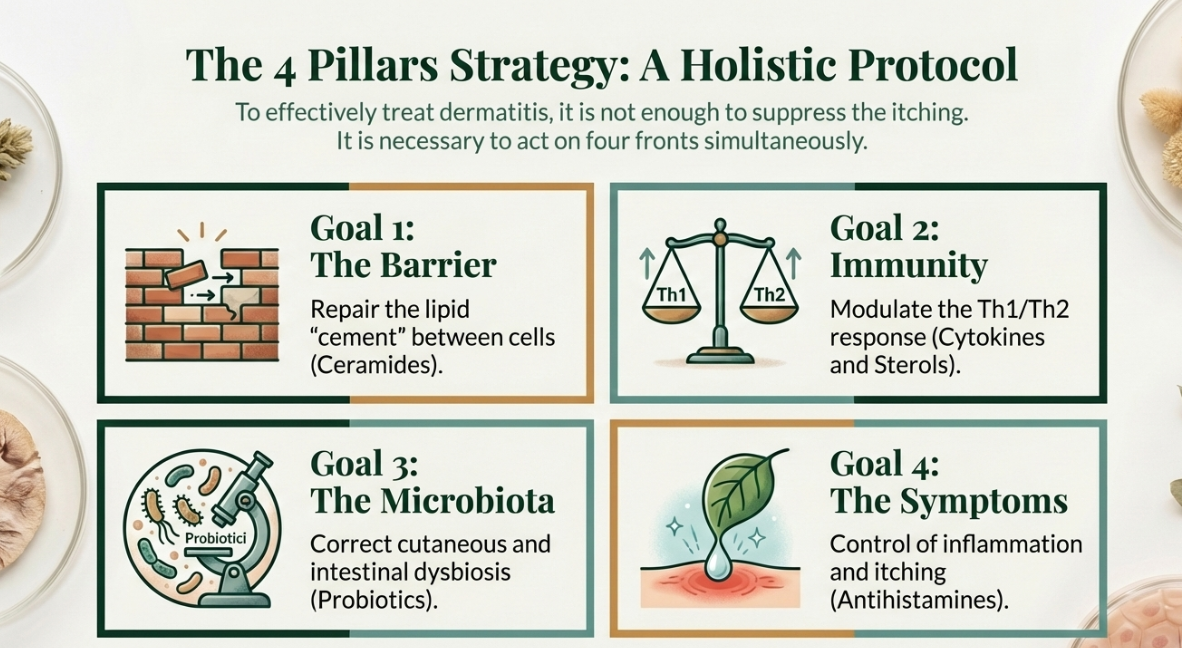
Treating atopic dermatitis in dogs with functional natural remedies means acting on several fronts: restoring the skin barrier, modulating the Th1/Th2 immune response, balancing the intestinal and skin microbiota and supporting the drainage of toxins. This holistic approach reduces itching and inflammation with targeted solutions such as PEA, Omega-3 and specific probiotics.
1. Understanding Canine Atopic Dermatitis: Not Just Itching
Atopic dermatitis (AD) is a chronic, genetically predisposed inflammatory skin disease that affects an increasing number of dogs. It is not just a skin problem, but a manifestation of a systemic imbalance involving the immune system, the skin barrier and the microbiota. The main symptom is intense itching, which leads the dog to lick, scratch and nibble, causing lesions, secondary infections and a significant deterioration in quality of life.
The Root Causes
- Skin Barrier Defect: Atopic skin has a compromised barrier (ceramide deficiency), which allows allergens and microorganisms to penetrate easily.
- Immune imbalance (Th1/Th2): A Th2-type immune response prevails, producing IgE antibodies and pro-inflammatory cytokines (IL-4, IL-5) responsible for allergic reactions.
- Dysbiosis Microbiota: Both in the intestine and in the skin, an alteration in the microbial balance promotes the proliferation of pathogens and inflammation.
2. Functional natural remedies: an integrated approach
Functional natural cures aim to restore the body’s balance and reduce inflammation and itching in the long term.
Objective A: Restoration of the Skin Barrier
Healthy skin is the first line of defense.
- Ceramides and Hyaluronic Acid: They are fundamental constituents of the skin barrier. Topical application or supplementation of specific products helps to “seal” the skin, reducing water loss and preventing allergens from entering.
- Coconut Oil: Its natural moisturizing and antibacterial properties (lauric acid) make it great for wraps or massages.
- Aloe Vera: Pure gel for immediate relief from localized redness and inflammation.
Aim B: Modulation of the Immune Response (Th1/Th2)
Regulating the immune system is crucial to reduce overreactions to allergens.
- Omega-3 (EPA/DHA): The essential fatty acids contained in fish or krill oil have a powerful anti-inflammatory effect, reducing the production of Th2 cytokines and promoting Th1 balance.
- Medicinal Mushrooms (Reishi, Shiitake): Rich in beta-glucans, they are known for their ability to modulate the immune system, reducing allergic responses and stimulating Th1 defenses.
- Ribes Nigrum (bud extract): It acts as a “natural cortisone”, reducing inflammation and hypersensitivity without the side effects of pharmacological steroids.
Objective C: Balance of the Microbiota (Intestine and Skin)
Healthy bacterial flora is the basis of a strong immune system.
- Specific probiotics: Strains such as Lactobacillus rhamnosus GG, L. salivarius LS01 and Bifidobacterium breve have been scientifically validated for their role in reducing atopic dermatitis, both by acting on the gut and skin.
- Prebiotics: Non-digestible fibers that feed the good bacteria, promoting their growth and activity.
Objective D: Drainage and Detoxification
The skin is an excretory organ. If the liver and kidneys are overloaded, toxins accumulate and are excreted through the skin, worsening the dermatitis.
- Galium-Heel: A homotoxicological remedy that supports the drainage of the extracellular matrix, helping the body to eliminate accumulated waste.
- Meristemo 6: A phytopreparation that optimizes the emunctory activity in the skin, supporting the correction of inflammatory states.
3. Key Supplements for Canine Atopic Dermatitis
| Integrator | Main Function | Specific benefit |
| PEA | Natural anti-inflammatory | Reduces itching and localized inflammation |
| Zinc Chelate | Mobile phone support | Maintains the integrity of the skin barrier and the well-being of the coat |
| Biotin | Essential vitamin | Improves the quality of the coat and skin, supports collagen synthesis |
| Collagen and Hyaluronic Acid | Tissue reconstruction | Promote the regeneration of damaged skin |
Dog Dermatitis Cortisone and Natural Alternatives
As I have written in other articles, Ribes Nigrum has anti-inflammatory and antihistamine activities, promotes the production of cortisol, essential for counteracting allergies and inflammation, and is considered a natural cortisone. Currants , now known by all, are a valid alternative to cortisone. It is recommended to buy alcohol-free currant nigrum bud.
Blackcurrant is useful both in localized and systemic allergic diseases and in acute and chronic inflammatory processes. The marked anti-inflammatory and anti-allergic action is due to the ability of Blackcurrant to reduce the number of cells (macrophages) involved in inflammatory processes. To have an enhanced effect, I suggest you always add borage oil.
FAQ: Frequently Asked Questions about Atopic Dermatitis in Dogs
Answer: Atopic dermatitis is a chronic condition with a genetic predisposition. However, with a targeted functional and holistic approach, you can effectively manage symptoms, reduce recurrence, and significantly improve your dog’s quality of life.
Answer: In case of persistent itching, it is necessary to act on the mast cell reactivity with the PEA (Palmitoylethanolamide), an aliamide that modulates inflammation without side effects. The association with the Ribes Nigrum (cortisone-like action) and the drainage of the extracellular matrix allows to reduce the sensation of itching by acting on the deep immune causes.
Answer: To reduce inflammation of atopic skin, it is necessary to restore the hydrolipidic barrier deficient in ceramides. The topical application of Pure Aloe Vera It gives immediate relief, but for a lasting result it is necessary to integrate Omega-3 (EPA/DHA) and specific probiotics that rebalance the skin microbiota, reducing the production of Th2 inflammatory cytokines.
Answer: It is essential to avoid harsh or scented detergents. The best choice is products based on colloidal oats or oily shampoos that do not alter the dog’s physiological pH (about 7.0). Washing must be followed by thorough drying to prevent moisture from promoting the proliferation of Malassezia, typical of subjects in dysbiosis.
Article published 2021 – Updated 2026

