


If you’ve found urine on your bed, your couch, or your favorite rug, you’re probably asking the same question thousands of cat owners search online every day:
Why is my cat peeing outside the litter box?
It’s frustrating. It’s confusing. And it’s easy to assume your cat is acting out because they’re angry, stubborn, or trying to get your attention.
But here’s the truth.
Cats don’t urinate outside the litter box out of revenge.
They don’t plot punishment.
And they don’t think the way humans do.
In most cases, inappropriate urination is your cat’s way of communicating that something isn’t right.
Sometimes the problem is physical, such as bladder inflammation, urinary stones, arthritis, diabetes, or chronic kidney disease. Other times, the bladder is only part of a much bigger picture involving stress, environmental changes, or complex interactions between the nervous system and the urinary tract.
Understanding the real reason behind this behavior is essential. Treating it as a simple behavioral problem can delay the diagnosis of painful or even life-threatening medical conditions. On the other hand, recognizing the warning signs early can help your veterinarian identify the underlying cause and greatly improve your cat’s quality of life.
In this guide, you’ll learn how to distinguish urine marking from inappropriate urination, discover the most common medical and behavioral causes, understand how veterinarians approach diagnosis, and explore evidence-based strategies that can help your cat feel safe, comfortable, and healthy again.
If you’ve found urine on your bed, your couch, or your favorite rug, you’re probably asking the same question thousands of cat owners search online every day:
Why is my cat peeing outside the litter box?
It’s frustrating. It’s confusing. And it’s easy to assume your cat is acting out because they’re angry, stubborn, or trying to get your attention.
But here’s the truth.
Cats don’t urinate outside the litter box out of revenge.
They don’t plot punishment.
And they don’t think the way humans do.
In most cases, inappropriate urination is your cat’s way of communicating that something isn’t right.
Sometimes the problem is physical, such as bladder inflammation, urinary stones, arthritis, diabetes, or chronic kidney disease. Other times, the bladder is only part of a much bigger picture involving stress, environmental changes, or complex interactions between the nervous system and the urinary tract.
Understanding the real reason behind this behavior is essential. Treating it as a simple behavioral problem can delay the diagnosis of painful or even life-threatening medical conditions. On the other hand, recognizing the warning signs early can help your veterinarian identify the underlying cause and greatly improve your cat’s quality of life.
In this guide, you’ll learn how to distinguish urine marking from inappropriate urination, discover the most common medical and behavioral causes, understand how veterinarians approach diagnosis, and explore evidence-based strategies that can help your cat feel safe, comfortable, and healthy again.
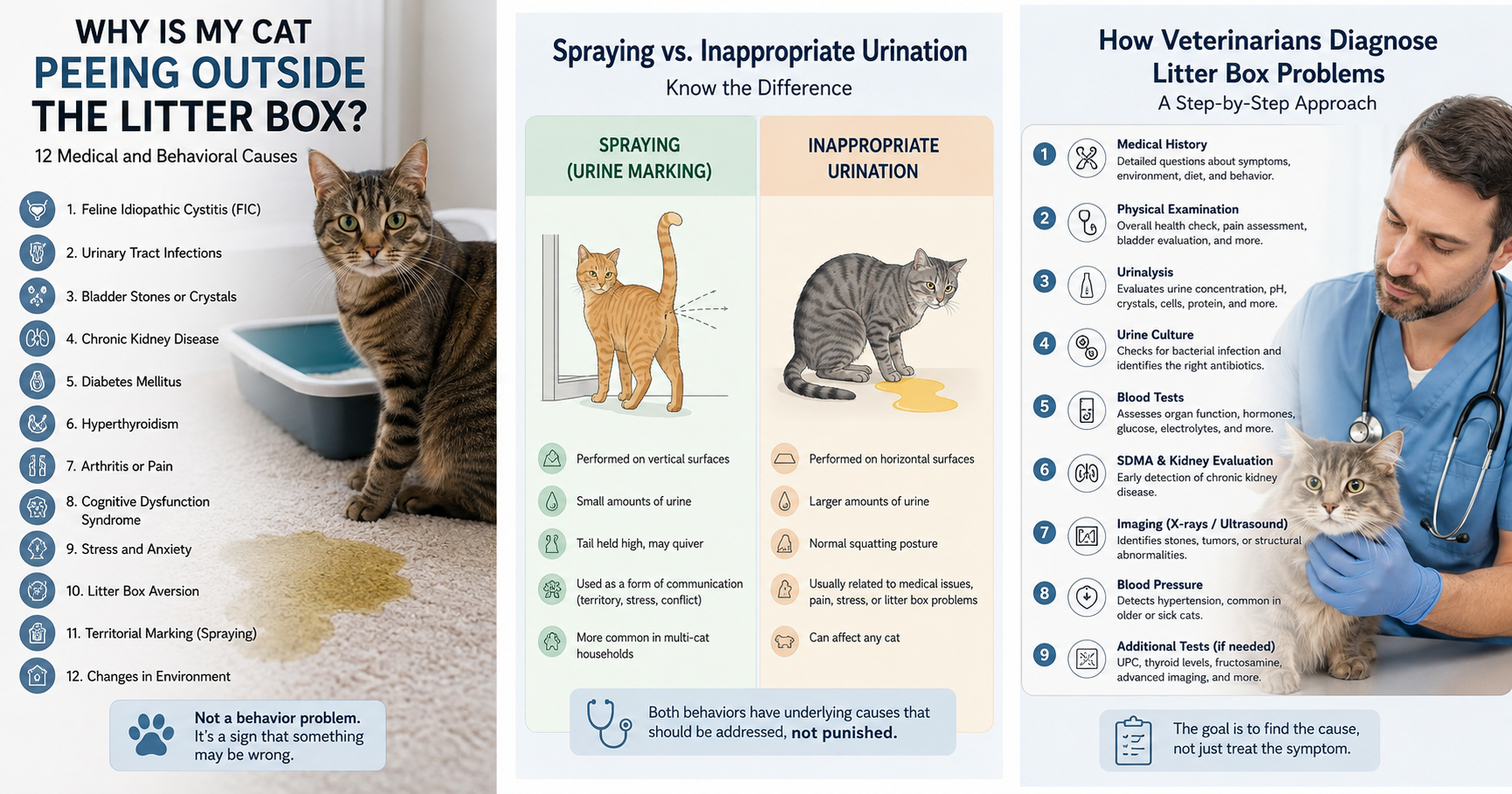
Urine Marking vs. Inappropriate Urination: What’s the Difference?
One of the most important steps in solving litter box problems is understanding what your cat is actually doing.
Many owners assume that any urine found outside the litter box means the same thing. In reality, veterinarians distinguish between urine marking (spraying) and inappropriate urination, and the difference can completely change the diagnostic approach.
Although both behaviors involve urine outside the litter box, they usually have very different underlying causes.
Urine marking is primarily a form of communication. Inappropriate urination is more often associated with pain, disease, discomfort, or an aversion to the litter box itself.
Recognizing the difference before your veterinary appointment can provide valuable clues and help narrow the list of possible causes.
Urine Marking (Spraying)
Spraying is a normal feline communication behavior.
Cats use urine to leave chemical messages containing pheromones that provide information to other cats. These scent signals may help establish territory, advertise reproductive status, or respond to changes in the environment.
While spraying is more common in intact males, neutered males and female cats can also spray, particularly when they feel stressed or threatened.
A cat that is spraying typically:
- Remains standing.
- Raises the tail vertically, often with a noticeable quiver.
- Backs up toward a vertical surface.
- Releases only a small amount of urine.
- Leaves urine on walls, doors, furniture, curtains, or windows.
Spraying is most commonly associated with:
- Territorial behavior.
- Outdoor cats visible through windows.
- The arrival of a new pet.
- A new baby or family member.
- Moving house.
- Conflict between cats.
- Major environmental changes.
Because spraying is largely a communication behavior, treatment usually focuses on reducing stress, addressing social conflict, and improving the cat’s environment rather than treating a urinary disease.
Inappropriate Urination
Inappropriate urination is something very different.
Instead of intentionally depositing scent messages, the cat is simply choosing—or being forced—to urinate somewhere other than the litter box.
Unlike spraying, these cats usually empty a significant portion of their bladder.
Most adopt the normal squatting posture used during urination.
Common locations include:
- Carpets.
- Rugs.
- Beds.
- Sofas.
- Laundry.
- Bathtubs.
- Smooth flooring.
This behavior is far more likely to indicate:
- Feline Idiopathic Cystitis (FIC).
- Urinary stones.
- Urinary crystals.
- Arthritis.
- Diabetes mellitus.
- Chronic kidney disease.
- Hyperthyroidism.
- Cognitive dysfunction.
- Litter box aversion.
- Environmental stress.
Although stress can contribute to both spraying and inappropriate urination, the latter should always be approached as a potential medical problem until proven otherwise.
Quick Comparison
| Feature | Urine Marking (Spraying) | Inappropriate Urination |
|---|---|---|
| Body posture | Standing | Squatting |
| Surface | Vertical | Horizontal |
| Amount of urine | Small | Normal to large |
| Primary purpose | Communication | Emptying the bladder |
| Most common causes | Territorial behavior, stress, social conflict | Medical disease, pain, litter box aversion, stress |
| Veterinary evaluation recommended | Yes, especially if new | Always |
Can Cats Do Both?
Yes.
This is one of the reasons inappropriate urination can be challenging to diagnose.
A cat with chronic stress may begin spraying to communicate with other cats while simultaneously developing Feline Idiopathic Cystitis, causing painful urination outside the litter box.
Likewise, an older cat with arthritis may avoid climbing into the litter box because of joint pain while also spraying in response to environmental changes.
For this reason, veterinarians rarely rely on a single behavior to reach a diagnosis.
Instead, they consider the cat’s:
- Medical history.
- Age.
- Environment.
- Urination pattern.
- Physical examination.
- Laboratory tests.
- Diagnostic imaging when needed.
Looking at the whole patient—not just the urine spot—is often the key to finding the real cause.
Why This Difference Matters
If you assume your cat is spraying when they’re actually experiencing painful urination, valuable time may be lost before a medical condition is diagnosed.
On the other hand, assuming every accident is caused by bladder disease may overlook important behavioral or environmental factors that also need attention.
That’s why veterinarians recommend approaching every new litter box problem with an open mind.
Behavior and health are closely connected in cats.
Sometimes the bladder is the primary problem.
Sometimes the environment is the trigger.
And very often, both are interacting at the same time.
The next step is understanding the medical conditions that most commonly cause cats to stop using the litter box—and learning which signs should never be ignored.
Medical Reasons Your Cat May Be Peeing Outside the Litter Box
When a cat suddenly stops using the litter box, it’s natural to wonder whether the problem is behavioral.
In reality, veterinarians know that medical conditions are among the most common causes of inappropriate urination.
Many of these diseases are painful.
Others increase urine production, making accidents more likely.
Some interfere with mobility, while others affect the nervous system or alter the way a cat perceives its environment.
The important message is this:
Never assume a litter box problem is “just behavioral” until medical causes have been ruled out.
Below are the most common conditions veterinarians consider when evaluating a cat that has started urinating outside the litter box.
Feline Idiopathic Cystitis (FIC)
One of the most common diagnoses in young and middle-aged cats is Feline Idiopathic Cystitis, often abbreviated as FIC.
The word idiopathic simply means that no single identifiable cause can be found.
Unlike bacterial urinary tract infections—which are relatively uncommon in otherwise healthy adult cats—FIC develops without evidence of bacteria, bladder stones, or tumors.
Instead, it appears to result from a complex interaction between the bladder, nervous system, stress response, genetics, and the cat’s environment.
Cats experiencing a flare-up may:
- Urinate frequently.
- Produce only small amounts of urine.
- Strain while urinating.
- Cry or vocalize.
- Have blood in the urine.
- Lick their genital area excessively.
- Urinate outside the litter box because the bladder has become painful.
One important characteristic of FIC is that symptoms often come and go.
A cat may seem completely normal for weeks or months before another episode suddenly appears.
Because of this recurring pattern, many owners mistakenly believe the problem has resolved permanently after the first episode.
Unfortunately, recurrence is common unless underlying contributing factors are addressed.
FLUTD: An Umbrella Term, Not a Diagnosis
Many owners hear the term FLUTD after visiting their veterinarian.
FLUTD stands for Feline Lower Urinary Tract Disease.
It’s important to understand that FLUTD is not a diagnosis.
Instead, it describes a group of disorders affecting the bladder and urethra.
These include:
- Feline Idiopathic Cystitis
- Urinary crystals
- Bladder stones
- Urethral plugs
- Urethral spasms
- Urinary tract infections
- Less commonly, bladder tumors
Because all of these conditions can cause similar symptoms, further testing is usually needed to determine the underlying cause.
Think of FLUTD the same way you would think of the phrase “respiratory disease.”
It tells you which body system is affected.
It doesn’t tell you the specific disease.
Urinary Crystals and Bladder Stones
Minerals naturally present in urine can sometimes combine to form microscopic crystals.
Under certain conditions, these crystals may grow into larger stones within the bladder.
The most common types include:
- Struvite
- Calcium oxalate
Some cats develop only mild irritation.
Others experience significant inflammation and pain.
Symptoms may include:
- Frequent trips to the litter box.
- Straining.
- Blood in the urine.
- Vocalizing while urinating.
- Urinating outside the litter box.
In male cats, crystals, mucus, and inflammatory debris can sometimes block the narrow urethra completely.
This is one of the most dangerous emergencies in feline medicine.
Urinary Blockage: A Life-Threatening Emergency
Every cat owner should recognize the warning signs of a urinary obstruction.
A blocked cat may:
- Enter the litter box repeatedly.
- Strain continuously.
- Produce little or no urine.
- Cry while attempting to urinate.
- Become restless.
- Hide.
- Vomit.
- Stop eating.
- Become weak or collapse as toxins accumulate in the body.
Without emergency treatment, the bladder continues to fill while the kidneys can no longer eliminate waste products.
Electrolyte imbalances develop rapidly, particularly elevated potassium levels, which can interfere with normal heart function.
A complete urinary obstruction is a true medical emergency.
If you suspect your cat cannot pass urine, seek immediate veterinary care.
Do not wait to see whether the problem improves overnight.
Every hour matters.
Urinary Tract Infection (UTI)
Many people assume that inappropriate urination automatically means a urinary tract infection.
In cats, that’s usually not the case.
Unlike dogs, healthy adult cats rarely develop bacterial bladder infections.
When a bacterial UTI does occur, veterinarians often look for an underlying reason.
Risk factors include:
- Advanced age.
- Diabetes mellitus.
- Chronic kidney disease.
- Immune suppression.
- Anatomical abnormalities.
Because symptoms of a urinary tract infection closely resemble those of FIC and bladder stones, urine culture is sometimes necessary to determine whether bacteria are actually present.
Treating every cat with antibiotics “just in case” is no longer considered good veterinary practice.
Current guidelines emphasize confirming bacterial infection whenever possible before prescribing antibiotics.
Diabetes Mellitus
Diabetes doesn’t directly affect the bladder.
Instead, it changes the amount of urine the body produces.
When blood glucose rises above the kidneys’ ability to reabsorb it, glucose spills into the urine.
Because glucose pulls water with it, diabetic cats begin producing much larger volumes of urine.
As a result, many diabetic cats:
- Drink significantly more water.
- Urinate much more frequently.
- Fill the litter box faster than before.
- Occasionally urinate outside the litter box because they simply cannot hold their bladder long enough.
Owners often notice increased thirst weeks before diagnosis.
Weight loss despite a good appetite is another common warning sign.
Hyperthyroidism
Hyperthyroidism is one of the most common hormonal disorders affecting older cats.
An overactive thyroid speeds up the body’s metabolism, leading to several characteristic changes.
Affected cats often:
- Drink more.
- Urinate more.
- Eat excessively.
- Lose weight.
- Become unusually active or restless.
Because urine production increases, litter box accidents may become more common, especially in senior cats.
Fortunately, hyperthyroidism is a treatable condition once properly diagnosed.
Arthritis: When the Litter Box Becomes Too Painful
Many people assume that if an older cat can still walk, arthritis isn’t a problem.
Unfortunately, that’s rarely true.
Research has shown that degenerative joint disease is extremely common in senior cats, yet many continue to hide signs of pain remarkably well.
Instead of limping like a dog, cats often compensate by changing their daily habits.
You may notice that your cat:
- Hesitates before jumping.
- No longer sleeps on high shelves.
- Uses stairs less often.
- Seems stiffer after resting.
- Sleeps more than usual.
- Avoids climbing into a high-sided litter box.
For an arthritic cat, using the litter box may simply become uncomfortable.
Stepping over a high entrance can hurt.
Walking downstairs to reach the litter box may require more effort than before.
Holding a squatting position long enough to urinate may become painful.
Faced with these obstacles, many cats choose the easiest available surface instead.
A soft rug.
A bath mat.
The carpet.
The floor next to the litter box.
This isn’t stubbornness.
It isn’t laziness.
It’s pain avoidance.
Fortunately, simple environmental changes can make a significant difference.
Many veterinarians recommend:
- Low-entry litter boxes.
- Larger litter boxes that allow easier movement.
- Placing litter boxes on every level of the home.
- Avoiding situations where the cat must climb stairs to reach the litter box.
In many cases, appropriate pain management dramatically improves litter box use.
Chronic Kidney Disease (CKD)
Chronic Kidney Disease (CKD) is one of the most common illnesses affecting older cats.
Because damaged kidneys gradually lose their ability to concentrate urine, affected cats begin producing larger amounts of dilute urine.
To compensate, they drink more water.
This combination of increased drinking (polydipsia) and increased urination (polyuria) creates new challenges.
A cat that has always used the litter box perfectly may suddenly:
- Fill the litter box much more quickly.
- Need to urinate more often.
- Fail to reach the litter box in time.
- Have accidents overnight.
- Urinate in unusual locations.
These accidents are rarely intentional.
Instead, they reflect changes in kidney function.
Many owners first notice:
- Larger urine clumps.
- Increased thirst.
- Weight loss.
- Reduced appetite.
- Poor coat quality.
Because CKD develops gradually, these early signs are often mistaken for normal aging.
They’re not.
Early diagnosis is extremely important.
Although CKD cannot be cured, early treatment can slow disease progression and significantly improve quality of life.
If your senior cat suddenly starts drinking more water while also urinating outside the litter box, a veterinary examination should never be delayed.
Cognitive Dysfunction Syndrome
As cats age, changes can occur not only in their joints and kidneys but also in their brain.
Feline Cognitive Dysfunction Syndrome (CDS) is sometimes compared to dementia in people.
Although many owners are unfamiliar with the condition, veterinarians are recognizing it with increasing frequency as cats live longer than ever before.
Affected cats may become:
- Disoriented.
- Confused.
- Less interactive.
- Awake during the night.
- More vocal.
- Forgetful.
Some cats simply forget where the litter box is located.
Others reach the litter box but become confused before entering.
Still others urinate in locations that previously held no significance.
These behavioral changes are not acts of defiance.
They reflect age-related changes in brain function.
Recognizing cognitive dysfunction early allows veterinarians to recommend environmental modifications, nutritional support, and management strategies that may help maintain quality of life.
Could More Than One Disease Be Present?
Absolutely.
One of the biggest mistakes owners—and sometimes even clinicians—can make is assuming there must be a single explanation.
Cats, especially seniors, often have multiple conditions at the same time.
For example, a 15-year-old cat may have:
- Chronic kidney disease causing increased urine production.
- Arthritis making it painful to climb into the litter box.
- Mild cognitive dysfunction causing occasional disorientation.
- Chronic stress triggered by the arrival of a new kitten.
Each condition contributes a small piece of the puzzle.
Together, they create a litter box problem that cannot be solved by changing the litter alone.
This is why veterinarians perform a comprehensive evaluation rather than focusing on just one symptom.
The goal is not simply to stop inappropriate urination.
The goal is to understand why this individual cat is no longer using the litter box.
Key Takeaways
Medical causes should always be considered first when a cat suddenly begins urinating outside the litter box.
Some diseases cause pain.
Others increase urine production.
Some reduce mobility.
Others affect memory, stress responses, or normal bladder function.
Many cats have more than one contributing factor.
The sooner these conditions are recognized, the greater the chance of improving your cat’s comfort, preserving quality of life, and preventing potentially life-threatening complications.
Pandora Syndrome: Why the Bladder Isn’t Always the Real Problem
For decades, veterinarians approached feline bladder disease in much the same way human medicine traditionally approached urinary tract disorders.
If the bladder was inflamed, then the bladder must be the problem.
It seemed logical.
Yet something didn’t fit.
Many cats continued to experience repeated episodes of painful urination despite having no bacterial infection, no bladder stones, and no tumors.
Urine cultures were negative.
Diagnostic imaging often appeared normal.
Bloodwork revealed no obvious explanation.
Still, these cats kept returning with the same distressing signs.
Why?
This question led researchers to rethink one of the most common feline diseases.
A Different Way of Looking at Feline Cystitis
One of the scientists who fundamentally changed our understanding of feline urinary disease was Dr. Tony Buffington, professor emeritus at The Ohio State University College of Veterinary Medicine.
Rather than focusing exclusively on the bladder, Dr. Buffington began examining the entire cat.
What he observed was remarkable.
Many cats suffering from recurrent Feline Idiopathic Cystitis (FIC) also appeared to have other seemingly unrelated problems.
Some developed gastrointestinal disturbances.
Others showed changes in skin health.
Many were unusually sensitive to pain.
Some reacted more intensely to environmental changes than other cats living in the same household.
These observations suggested that the bladder might not be acting alone.
Instead, it could be one visible expression of a much broader physiological disorder.
What Is Pandora Syndrome?
To describe this broader picture, Dr. Buffington introduced the concept of Pandora Syndrome.
The name comes from the Greek myth of Pandora’s Box.
At first glance, the problem appears simple.
Open the box…
and you discover something much more complex.
In the same way, a cat presenting with bladder inflammation may actually be experiencing changes involving multiple body systems rather than an isolated bladder disease.
This doesn’t mean that every cat with FIC has Pandora Syndrome.
Nor does it mean the bladder isn’t important.
Instead, it reminds us that the bladder may be one part of a much larger biological response involving the nervous system, endocrine system, immune system, and the cat’s environment.
In other words:
Sometimes the bladder is the messenger—not the entire message.
The Brain–Bladder Connection
One of the most important discoveries in feline medicine is the close relationship between the brain and the urinary bladder.
The bladder isn’t simply a storage container for urine.
It’s connected to an extensive network of nerves that constantly communicate with the brain.
These signals regulate:
- Bladder filling.
- Sensations of discomfort.
- Pain perception.
- Muscle contraction.
- Normal urination.
When this communication becomes dysregulated, the bladder may become excessively sensitive.
Even normal bladder filling can trigger discomfort.
This heightened sensitivity is believed to contribute to the pain experienced by many cats with FIC.
Why Stress Matters
When people hear the word stress, they often imagine dramatic emotional events.
Cats experience stress differently.
Stress is simply the body’s response to a challenge.
In healthy individuals, this response is temporary.
The nervous system activates.
Stress hormones rise.
The body prepares to respond.
Once the challenge disappears, everything gradually returns to normal.
But research suggests that some cats with recurrent idiopathic cystitis may process stress differently.
Instead of returning quickly to a balanced state, their stress-response systems may remain activated for longer periods.
Scientists believe this prolonged activation can influence bladder function, pain perception, and inflammatory processes.
Importantly, stress is not considered the sole cause of FIC.
Rather, it is one of several interacting factors that may contribute to disease development or trigger clinical flare-ups in susceptible cats.
This distinction matters.
Saying that stress plays a role is very different from saying the disease is “all in the cat’s head.”
FIC is a genuine medical condition with measurable physiological changes.
Everyday Stressors You Might Never Notice
One reason FIC can be difficult to manage is that many stressors are subtle.
Cats are highly sensitive to changes that humans often overlook.
Examples include:
- A new pet joining the household.
- Construction or remodeling.
- Moving furniture.
- Changes in daily routine.
- Visitors staying in the home.
- Outdoor cats visible through windows.
- Competition over food bowls or litter boxes.
- Lack of safe hiding places.
- Limited opportunities for climbing and exploring.
Even positive life events—such as welcoming a new family member—can temporarily increase stress for some cats.
This doesn’t mean these events should be avoided.
It simply means that sensitive cats may benefit from additional environmental support during periods of change.
The Hidden Problem in Multi-Cat Homes
Perhaps the most underestimated source of chronic stress is conflict between cats.
Many owners imagine conflict as loud fights with hissing, growling, and physical aggression.
In reality, the most significant conflicts are often silent.
One cat consistently occupies the hallway leading to the litter box.
Another controls access to a favorite sleeping area.
One blocks the route to the food bowls without ever attacking.
The other simply walks away.
To human observers, everything appears peaceful.
To the more vulnerable cat, every day may feel unpredictable.
Over weeks or months, this ongoing social tension can become a significant source of chronic stress.
This is one reason veterinarians often ask detailed questions about the relationships between cats living in the same household.
A New Way to Think About Treatment
Understanding Pandora Syndrome changes the goal of treatment.
Instead of focusing only on the bladder, veterinarians increasingly aim to improve the cat’s overall physical and emotional well-being.
Pain control remains essential when pain is present.
Medical diseases must still be diagnosed and treated appropriately.
But environmental health also becomes part of the therapeutic plan.
This shift in thinking led to one of the most important evidence-based approaches in modern feline medicine:
Multimodal Environmental Modification (MEMO).
Rather than relying on a single medication or supplement, MEMO addresses the everyday experiences that influence a cat’s sense of safety, predictability, and control.
For many cats with recurrent Feline Idiopathic Cystitis, these environmental improvements become just as important as medical treatment.
And that’s exactly where we’ll go next. We’ll explore the evidence behind MEMO, the practical changes you can make at home, and why small adjustments to your cat’s environment can have a surprisingly large impact on their urinary health.
Evidence-Based Ways to Help a Cat That Is Peeing Outside the Litter Box
After identifying and treating any underlying medical condition, the next step is helping your cat feel comfortable using the litter box again.
This is where many owners make an understandable mistake.
They start replacing litter.
Buying new litter boxes.
Trying odor eliminators.
Searching for miracle supplements.
While these changes may occasionally help, they often fail because they’re focused on the symptom rather than the underlying cause.
The most successful treatment plans are rarely based on a single product.
Instead, they combine veterinary care with thoughtful environmental changes tailored to the individual cat.
What Is Multimodal Environmental Modification (MEMO)?
One of the most important advances in feline behavioral medicine is Multimodal Environmental Modification, commonly called MEMO.
Developed from decades of feline behavioral research, MEMO is based on a simple principle:
A healthy indoor environment should allow cats to express their natural behaviors while minimizing unnecessary stress.
Rather than asking,
“How do I stop my cat from peeing outside the litter box?”
MEMO asks a different question:
“What does this cat need in order to feel safe?”
For many cats with Feline Idiopathic Cystitis, recurrent stress-related urinary problems, or litter box aversion, the answer lies in improving multiple aspects of daily life instead of relying on a single treatment.
Think of MEMO as building a healthier ecosystem rather than fixing one isolated symptom.
1. Increase Water Intake
Water is one of the most overlooked components of urinary health.
Cats evolved as desert hunters.
Their ancestors obtained much of their daily water from prey rather than from drinking.
Even today, many domestic cats have a naturally low thirst drive.
As a result, they often produce relatively concentrated urine.
Concentrated urine can increase irritation in an already inflamed bladder and may contribute to the formation of certain urinary crystals in susceptible cats.
Increasing water intake helps dilute the urine and supports overall urinary tract health.
There are several practical ways to encourage drinking:
- Feed primarily wet food whenever appropriate for your cat’s medical condition.
- Place multiple water bowls throughout the home.
- Keep bowls away from food and litter boxes.
- Wash bowls daily and refill them with fresh water.
- Experiment with different bowl materials such as ceramic, glass, or stainless steel.
- Offer wide, shallow bowls that avoid irritating sensitive whiskers.
- Consider a drinking fountain if your cat prefers moving water.
Not every cat likes fountains.
Not every cat prefers the same bowl.
The goal isn’t to force a particular solution.
The goal is to discover what encourages your individual cat to drink more consistently.
2. Rethink the Litter Box
Many litter box problems have surprisingly simple environmental explanations.
Veterinary behaviorists often recommend following the “N + 1 Rule.”
This means:
The number of litter boxes should equal the number of cats plus one.
For example:
| Number of Cats | Recommended Litter Boxes |
|---|---|
| 1 | 2 |
| 2 | 3 |
| 3 | 4 |
This recommendation reduces competition and gives each cat more choices.
Location matters just as much.
A litter box should never become a place where a cat feels trapped.
Avoid placing litter boxes:
- Next to noisy washing machines.
- Beside dryers or furnaces.
- In busy hallways.
- Near food and water bowls.
- In areas where another cat can block access.
Whenever possible, place litter boxes in quiet, predictable locations that are easy to reach day and night.
3. Choose the Right Litter
Cats generally prefer:
- Unscented litter.
- Fine-textured clumping litter.
- A clean litter box.
- Adequate depth for digging.
Strong fragrances that seem pleasant to humans can overwhelm a cat’s highly sensitive sense of smell.
When changing litter brands, do so gradually.
Sudden changes may increase litter box avoidance in sensitive cats.
If your cat has been successfully using one type of litter for years, changing it without a clear reason is rarely beneficial.
4. Think in Three Dimensions
Humans live primarily on the floor.
Cats don’t.
They naturally use vertical space to observe their surroundings, avoid conflict, and feel secure.
Providing opportunities to climb can significantly reduce stress in many households.
Examples include:
- Cat trees.
- Wall-mounted shelves.
- Window perches.
- Stable bookcases designed for climbing.
- Elevated resting platforms.
Vertical territory is particularly valuable in homes with multiple cats because it increases usable living space without increasing floor area.
5. Encourage Natural Hunting Behavior
Play isn’t simply entertainment.
It’s an essential behavioral need.
Cats are predators.
Their brains evolved to stalk, chase, pounce, and capture prey.
Indoor life often removes these opportunities.
Interactive play sessions help satisfy these instincts while reducing boredom and frustration.
Many veterinarians recommend:
- Wand toys.
- Feather toys.
- Small prey-like toys.
- Puzzle feeders.
- Food-dispensing toys.
Short sessions performed consistently are usually more beneficial than occasional long play sessions.
Even five to ten minutes twice a day can make a meaningful difference for many cats.
6. Reduce Conflict Between Cats
If multiple cats share your home, don’t assume they’re getting along simply because they aren’t fighting.
Social tension is often subtle.
Watch for signs such as:
- One cat waiting before approaching food.
- A cat avoiding certain hallways.
- One individual always occupying high resting places.
- Hesitation before entering the litter box area.
- One cat repeatedly staring at another.
Creating multiple resource stations throughout the home often reduces competition.
Each cat should ideally have access to:
- Food bowls.
- Water bowls.
- Resting places.
- Scratching posts.
- Hiding places.
- Elevated areas.
- Litter boxes.
The goal is to reduce the need for competition rather than forcing cats to share limited resources.
7. Can Pheromone Products Help?
Synthetic feline facial pheromone analogs may help reduce stress in some cats.
Research suggests these products can be beneficial in certain situations, particularly when environmental stress contributes to urinary disease or urine marking.
However, it’s important to have realistic expectations.
Pheromone products are not a cure.
They cannot dissolve bladder stones.
They cannot treat urinary obstruction.
They cannot replace pain management or veterinary care.
Instead, they should be viewed as one component of a comprehensive treatment plan that also addresses medical conditions and environmental needs.
8. What About Supplements?
Owners frequently ask about supplements marketed for urinary health or stress reduction.
While some products have emerging evidence supporting specific ingredients, the scientific quality varies considerably.
No supplement should replace a proper veterinary diagnosis.
Before starting any nutraceutical, discuss it with your veterinarian to ensure it is appropriate for your cat’s age, medical history, and current medications.
Evidence-based treatment always begins with identifying the underlying cause.
The Most Important Lesson
Many owners spend weeks trying to stop inappropriate urination.
But successful treatment starts with understanding why the behavior began in the first place.
Changing the litter box rarely fixes arthritis.
A new litter won’t treat diabetes.
Air fresheners won’t resolve chronic kidney disease.
And punishment certainly won’t reduce bladder pain.
The most effective approach combines:
- Accurate veterinary diagnosis.
- Appropriate medical treatment.
- Pain management when needed.
- Environmental enrichment.
- Stress reduction.
- Ongoing monitoring.
When these pieces come together, many cats experience substantial improvement—and many owners discover that the “behavior problem” they were trying to solve was actually their cat’s way of asking for help.
How Veterinarians Diagnose a Cat That Is Peeing Outside the Litter Box
One of the biggest misconceptions about litter box problems is that there’s a single test that provides the answer.
In reality, diagnosing inappropriate urination is often like putting together a puzzle.
Every piece of information matters.
Your observations at home.
Your cat’s medical history.
The physical examination.
Laboratory tests.
And, when needed, diagnostic imaging.
The goal isn’t simply to confirm that something is wrong with the bladder.
It’s to identify the underlying reason your cat has stopped using the litter box.
Step 1: A Detailed Medical History
Long before performing any tests, your veterinarian will ask questions that may seem surprisingly specific.
For example:
- When did the problem begin?
- Did it start suddenly or gradually?
- Is your cat urinating on horizontal surfaces or spraying vertical ones?
- Are they producing normal amounts of urine or only a few drops?
- Have you noticed blood in the urine?
- Has your cat been drinking more water?
- Have there been any recent changes at home?
- Are there other cats in the household?
- Has the litter type or litter box location changed?
- Is your cat eating normally?
- Have they lost weight?
- Are they jumping less than before?
These answers often provide the first clues about whether the problem is more likely to be medical, behavioral, or a combination of both.
Step 2: Physical Examination
Next comes a thorough physical examination.
Your veterinarian will evaluate your cat’s overall health, including:
- Body weight and body condition.
- Hydration status.
- Temperature.
- Heart and lung function.
- Abdominal palpation.
- Bladder size.
- Signs of pain.
- Joint mobility.
- Muscle condition.
In male cats, bladder palpation is particularly important.
A large, firm bladder combined with repeated unsuccessful attempts to urinate strongly suggests urinary obstruction and requires immediate treatment.
Step 3: Urinalysis
A urinalysis is one of the most valuable diagnostic tests for cats with urinary problems.
It provides information about:
- Urine concentration (specific gravity).
- Blood.
- Protein.
- Glucose.
- Ketones.
- pH.
- Crystals.
- Inflammatory cells.
- Microscopic sediment.
Urinalysis can help identify important conditions such as:
- Diabetes mellitus.
- Chronic kidney disease.
- Urinary crystals.
- Inflammation.
- Kidney concentrating ability.
Whenever possible, veterinarians prefer a fresh urine sample collected by cystocentesis, a sterile technique in which urine is obtained directly from the bladder using a fine needle.
Although this may sound alarming, most cats tolerate the procedure very well, and it greatly reduces contamination from the lower urinary tract.
Step 4: Urine Culture
Finding inflammatory cells in the urine does not automatically mean bacteria are present.
That’s why your veterinarian may recommend a urine culture, especially if:
- Your cat is elderly.
- Diabetes is suspected.
- Chronic kidney disease is present.
- Previous antibiotic treatment has failed.
- Recurrent urinary problems occur.
A urine culture identifies whether bacteria are actually growing and determines which antibiotics, if any, are most likely to be effective.
This approach supports responsible antibiotic use and helps reduce antimicrobial resistance.
Step 5: Blood Tests
Bloodwork allows veterinarians to look beyond the urinary tract.
Routine blood tests may reveal diseases that contribute to inappropriate urination, including:
- Chronic kidney disease.
- Diabetes mellitus.
- Hyperthyroidism.
- Electrolyte abnormalities.
- Dehydration.
- Liver disease.
- Anemia.
- Systemic inflammation.
In senior cats, blood testing is often an essential part of the diagnostic process, even when the primary complaint appears to involve the litter box.
SDMA and Kidney Function
One marker that has become increasingly important is Symmetric Dimethylarginine (SDMA).
Unlike creatinine, which may remain within the reference range until a significant amount of kidney function has already been lost, SDMA can help detect reduced kidney function at an earlier stage in many cats.
Because chronic kidney disease frequently causes increased urination, SDMA is particularly valuable when evaluating older cats that suddenly begin having litter box accidents.
Your veterinarian will interpret SDMA alongside:
- Creatinine.
- Blood urea nitrogen (BUN).
- Urine specific gravity.
- Clinical signs.
- Blood pressure.
- Other laboratory findings.
No single value should ever be interpreted in isolation.
Diagnostic Imaging
If bladder stones, tumors, or structural abnormalities are suspected, imaging may be recommended.
Depending on the situation, this may include:
Radiographs (X-rays)
Useful for detecting many bladder stones and evaluating the urinary tract.
Ultrasound
Provides a detailed view of:
- The bladder wall.
- Bladder contents.
- Kidneys.
- Ureters.
- Surrounding soft tissues.
Ultrasound is especially valuable because some stones are difficult to detect on radiographs, while bladder tumors and inflammatory changes may be more easily identified.
Blood Pressure Measurement
High blood pressure is surprisingly common in older cats, particularly those with chronic kidney disease or hyperthyroidism.
Although hypertension doesn’t directly cause inappropriate urination, identifying and treating it is an important part of evaluating senior cats with chronic illnesses.
Routine blood pressure measurement has become an increasingly important component of feline geriatric care.
Could Additional Tests Be Needed?
Sometimes.
Depending on your cat’s age, symptoms, and initial test results, your veterinarian may recommend additional diagnostics such as:
- Urine protein-to-creatinine ratio (UPC).
- Thyroid hormone (Total T4).
- Fructosamine testing.
- Urinary stone analysis.
- Advanced imaging.
- Referral to a veterinary specialist.
Not every cat requires every test.
The diagnostic plan should always be individualized based on clinical findings.
Why a Diagnosis Matters
It can be tempting to search for a quick solution online.
But inappropriate urination isn’t a disease.
It’s a symptom.
And the same symptom can be caused by dozens of very different conditions.
Treating every cat with the same litter, the same supplement, or the same behavioral advice ignores those important differences.
A cat with arthritis needs pain management.
A cat with diabetes needs diabetic care.
A cat with chronic kidney disease needs kidney support.
A blocked cat needs emergency treatment.
And a cat with Feline Idiopathic Cystitis often needs both medical care and environmental modification.
Only after understanding the cause can treatment truly begin.
When Should You Call a Veterinarian Immediately?
Not every litter box accident is an emergency.
But some are.
Knowing the difference can save your cat’s life.
While many causes of inappropriate urination develop gradually, others require immediate veterinary attention. Waiting too long can allow a treatable condition to become life-threatening.
If you’re ever unsure whether your cat needs urgent care, it’s always safer to contact your veterinarian than to wait and hope the problem resolves on its own.
🚨 Emergency #1: Your Cat Is Straining but Producing Little or No Urine
This is the most serious urinary emergency in cats.
A urinary obstruction occurs when urine can no longer leave the bladder.
Although it can occasionally occur in females, it is far more common in male cats because their urethra is much narrower.
Warning signs include:
- Repeated trips to the litter box.
- Straining to urinate.
- Producing only a few drops—or no urine at all.
- Crying or vocalizing.
- Licking the genital area repeatedly.
- Restlessness.
- Hiding.
- Vomiting.
- Loss of appetite.
- Weakness or collapse.
As pressure builds inside the bladder, the kidneys can no longer remove waste products or regulate electrolytes effectively.
One of the most dangerous consequences is hyperkalemia, a dangerously high potassium level that can interfere with normal heart rhythm.
Without emergency treatment, a complete urinary obstruction can become fatal.
Do not wait until the next morning.
If you think your cat is unable to urinate, seek emergency veterinary care immediately.
🚨 Emergency #2: Blood in the Urine
Seeing blood in your cat’s urine is never normal.
Blood may appear as:
- Pink urine.
- Red urine.
- Small blood clots.
- Blood spots around the litter box.
Blood doesn’t always mean a life-threatening condition.
It may occur with:
- Feline Idiopathic Cystitis.
- Bladder stones.
- Urinary tract infection.
- Trauma.
- Less commonly, bladder tumors.
However, because the underlying cause cannot be determined at home, blood in the urine should always prompt veterinary evaluation.
If blood is accompanied by straining or inability to urinate, treat it as an emergency.
🚨 Emergency #3: Vomiting, Weakness, or Collapse
Urinary disease doesn’t always stay confined to the bladder.
As toxins accumulate in the bloodstream, affected cats may begin showing signs throughout the body.
Seek immediate veterinary attention if your cat develops:
- Repeated vomiting.
- Extreme lethargy.
- Collapse.
- Difficulty walking.
- Pale gums.
- Severe weakness.
- Unresponsiveness.
These signs may indicate advanced urinary obstruction or another serious systemic illness.
🚨 Emergency #4: Sudden Changes in Senior Cats
Older cats often develop chronic diseases gradually.
Because these illnesses progress slowly, early warning signs can be surprisingly subtle.
Contact your veterinarian promptly if your senior cat suddenly:
- Starts drinking much more water.
- Produces unusually large urine clumps.
- Begins urinating outside the litter box for the first time.
- Loses weight.
- Stops jumping.
- Appears confused.
- Becomes less interested in food.
Although these changes may not require an emergency hospital visit, they should never be dismissed as “normal aging.”
They may be the earliest signs of:
- Chronic Kidney Disease.
- Diabetes mellitus.
- Hyperthyroidism.
- Arthritis.
- Cognitive Dysfunction Syndrome.
Early diagnosis often leads to better long-term outcomes.
Can You Wait Until Tomorrow?
This is one of the most common questions cat owners ask.
The answer depends on what you’re seeing.
Seek emergency care immediately if your cat:
- Cannot pass urine.
- Is repeatedly straining.
- Is crying while trying to urinate.
- Has a painful, enlarged abdomen.
- Is vomiting or collapsing.
- Appears severely weak or unresponsive.
Schedule a veterinary appointment as soon as possible if your cat:
- Begins urinating outside the litter box without obvious pain.
- Drinks significantly more water.
- Produces larger urine clumps than usual.
- Shows blood in the urine but is otherwise stable.
- Develops recurrent accidents.
- Stops jumping or appears stiff.
- Shows changes in behavior or confusion.
When in doubt, call your veterinarian.
It’s always better to ask than to risk overlooking a serious medical condition.
Can You Treat This at Home?
Owners often search online for:
- Home remedies.
- Natural treatments.
- Supplements.
- Behavioral tricks.
- DIY solutions.
While some supportive measures—such as increasing water intake, improving the environment, and reducing stress—can be extremely valuable after a diagnosis has been made, they should never replace veterinary care.
Home treatment should never be used if:
- Your cat cannot urinate.
- Blood is present.
- Your cat is vomiting.
- Severe pain is suspected.
- Your cat appears weak or collapsed.
These situations require immediate professional care.
A Simple Rule to Remember
If your cat suddenly stops using the litter box, don’t ask yourself:
“How can I stop this behavior?”
Instead ask:
“Could my cat be trying to tell me something?”
That simple shift in perspective often makes the difference between treating a symptom…
and identifying the real problem.
Frequently Asked Questions
Why is my cat peeing outside the litter box but acting normal?
Cats instinctively hide signs of illness, making it difficult to recognize pain in its early stages. A cat may continue eating, playing, and behaving normally while developing conditions such as Feline Idiopathic Cystitis (FIC), arthritis, chronic kidney disease, diabetes, or hyperthyroidism. Inappropriate urination is often one of the first noticeable signs that something is wrong. Even if your cat appears healthy, any sudden change in litter box habits deserves a veterinary examination.
Is my cat peeing outside the litter box out of spite?
No.
Scientific evidence does not support the idea that cats urinate outside the litter box to punish their owners.
Cats do not think in terms of revenge. Instead, inappropriate urination is usually a response to pain, illness, environmental stress, litter box aversion, or territorial communication.
Rather than asking “Why is my cat being bad?”, ask “What is my cat trying to communicate?”
What is the most common medical reason cats stop using the litter box?
One of the most common medical causes is Feline Idiopathic Cystitis (FIC), an inflammatory condition of the bladder that develops without bacterial infection or bladder stones.
Other common causes include:
- Urinary crystals
- Bladder stones
- Diabetes mellitus
- Hyperthyroidism
- Chronic kidney disease
- Arthritis
- Cognitive Dysfunction Syndrome in senior cats
Because these conditions produce similar symptoms, veterinary testing is usually required to identify the exact cause.
Can stress really make a cat pee outside the litter box?
Yes.
Stress is considered an important contributing factor in many cats with Feline Idiopathic Cystitis, although it is not the only cause.
Changes such as moving house, introducing a new pet, household conflict between cats, remodeling, or major routine changes can activate the body’s stress response and trigger urinary flare-ups in susceptible cats.
Reducing environmental stress is often an important part of long-term management.
How can I tell the difference between spraying and inappropriate urination?
Cats that are spraying usually:
- Stand upright.
- Raise and quiver their tail.
- Spray a small amount of urine on vertical surfaces.
Cats experiencing inappropriate urination usually:
- Squat normally.
- Empty most or all of their bladder.
- Urinate on horizontal surfaces such as carpets, beds, or floors.
Although these behaviors often have different causes, both deserve veterinary attention when they appear suddenly.
Why is my cat peeing on my bed?
Beds often absorb urine well and carry the owner’s familiar scent.
A cat may choose the bed because it feels safe during times of stress, because reaching the litter box has become painful, or because they have developed a negative association with the litter box.
Medical causes—including bladder disease, arthritis, diabetes, and chronic kidney disease—should always be ruled out before assuming the problem is behavioral.
Why is my cat peeing right next to the litter box?
Urinating immediately beside the litter box often suggests that the cat wants to use it but finds something about it uncomfortable.
Possible reasons include:
- Pain while climbing into the box.
- Litter box aversion.
- Unsuitable litter.
- Dirty litter.
- Stress.
- Arthritis.
- Bladder pain.
Because both behavioral and medical factors may contribute, a veterinary evaluation is recommended.
Can arthritis cause litter box problems?
Absolutely.
Arthritis is extremely common in older cats and often goes unnoticed.
Pain may make climbing into a high-sided litter box difficult or maintaining a squatting posture uncomfortable.
Providing low-entry litter boxes, reducing stair climbing, and treating joint pain often improves litter box use significantly.
Can chronic kidney disease cause litter box accidents?
Yes.
Cats with Chronic Kidney Disease (CKD) produce larger amounts of dilute urine because their kidneys gradually lose the ability to concentrate it.
As urine volume increases, some cats simply cannot reach the litter box in time.
Increased thirst, larger urine clumps, weight loss, and reduced appetite should prompt veterinary evaluation.
Why is my senior cat suddenly peeing outside the litter box?
Senior cats frequently develop age-related conditions that affect normal urination.
Common causes include:
- Chronic kidney disease.
- Hyperthyroidism.
- Diabetes mellitus.
- Arthritis.
- Cognitive Dysfunction Syndrome.
- Bladder disease.
Any new litter box problem in an older cat should be investigated promptly rather than dismissed as normal aging.
Should I punish my cat for peeing outside the litter box?
No.
Punishment does not teach cats why they should use the litter box.
Instead, it often increases fear and stress, which may worsen existing urinary problems.
If urination has become painful, punishment can also strengthen your cat’s negative association with the litter box.
Successful treatment focuses on identifying and addressing the underlying cause—not on correcting the symptom.
Can changing the litter solve the problem?
Sometimes—but only if the litter itself is the problem.
If your cat dislikes a scented litter, the texture has changed, or the box isn’t cleaned often enough, switching products may help.
However, changing litter will not treat bladder inflammation, urinary stones, arthritis, diabetes, or chronic kidney disease.
If accidents begin suddenly, medical causes should always be investigated first.
Do pheromone diffusers really work?
Synthetic feline facial pheromone products may help reduce stress in some cats, particularly when environmental factors contribute to inappropriate urination or urine marking.
However, they are not a cure.
They should be used as part of a broader treatment plan that includes veterinary diagnosis, environmental modification, and appropriate medical care when needed.
Can diet help prevent urinary problems?
Nutrition plays an important role in urinary health, but the best diet depends on the underlying diagnosis.
For many cats, increasing water intake through wet food helps produce more dilute urine.
Cats with bladder stones, chronic kidney disease, diabetes, or other medical conditions may require specific therapeutic diets recommended by their veterinarian.
Because different urinary diseases require different nutritional strategies, dietary changes should always be based on an accurate diagnosis.
What is the single most important thing I should remember?
A cat that suddenly starts peeing outside the litter box is almost never trying to make your life difficult.
They’re trying to tell you that something in their body, their environment, or their daily routine has changed.
Listening to that message—and working with your veterinarian to understand its cause—is the most effective way to help your cat regain both comfort and confidence.
Key Takeaways
If your cat suddenly starts peeing outside the litter box, remember these essential points:
- Cats do not urinate outside the litter box out of spite or revenge.
- Inappropriate urination is a symptom, not a diagnosis.
- Medical causes should always be ruled out before assuming the problem is behavioral.
- Common causes include Feline Idiopathic Cystitis (FIC), urinary stones, arthritis, diabetes, chronic kidney disease, hyperthyroidism, and cognitive dysfunction.
- Urine marking and inappropriate urination are different behaviors with different underlying causes.
- Chronic stress can contribute to urinary disease, particularly in susceptible cats.
- Environmental enrichment through Multimodal Environmental Modification (MEMO) is an evidence-based component of treatment.
- A male cat that is straining to urinate but producing little or no urine requires immediate emergency veterinary care.
- Early diagnosis often improves both prognosis and quality of life.
Final Thoughts
Finding urine outside the litter box is frustrating.
It disrupts your home.
It creates extra work.
And it often leaves owners wondering what they did wrong.
But perhaps the most important thing to remember is this:
Your cat isn’t trying to punish you.
They’re trying to communicate.
Sometimes they’re communicating pain.
Sometimes they’re communicating fear.
Sometimes they’re telling you that something inside their body has changed long before any other obvious signs appear.
And sometimes they’re simply telling you that their environment no longer feels safe.
When we stop viewing inappropriate urination as bad behavior and start seeing it as valuable clinical information, our entire approach changes.
We stop blaming.
We start observing.
We stop reacting.
We start asking better questions.
That shift in perspective doesn’t just improve litter box habits.
It improves your cat’s quality of life.
The litter box isn’t simply a place where your cat urinates.
It’s one of the most important windows into their health.
Learning to recognize changes early may allow diseases such as chronic kidney disease, diabetes, arthritis, hyperthyroidism, or urinary obstruction to be diagnosed before they become far more serious.
No article can replace a veterinary examination.
But understanding the possible causes helps you recognize when something isn’t right—and seek help sooner rather than later.
Your cat may never be able to explain what’s wrong with words.
Sometimes, the puddle on the floor is the only message they know how to send.
Listening to that message may be one of the most important things you ever do for them.
Evidence-Based References
This article is based on current veterinary recommendations and peer-reviewed scientific literature, including guidance from:
- International Society of Feline Medicine (ISFM)
- American Association of Feline Practitioners (AAFP)
- World Small Animal Veterinary Association (WSAVA)
- International Renal Interest Society (IRIS) (for CKD-related recommendations)
- Ohio State Indoor Pet Initiative (Dr. Tony Buffington and colleagues)
- Merck Veterinary Manual
- International Cat Care (iCatCare)
Key scientific publications include:
- Buffington CAT, Westropp JL, Chew DJ, Bolus RR. Clinical evaluation of multimodal environmental modification (MEMO) in cats with Feline Idiopathic Cystitis.
- Buffington CAT. Pandora Syndrome in Cats.
- AAFP/ISFM Feline Environmental Needs Guidelines.
- ISFM Consensus Guidelines on Feline Lower Urinary Tract Disease.
- IRIS Chronic Kidney Disease Guidelines.
- Recent peer-reviewed reviews indexed in PubMed on Feline Idiopathic Cystitis, FLUTD, arthritis, chronic kidney disease, and feline behavioral medicine.

Discussion about this post