


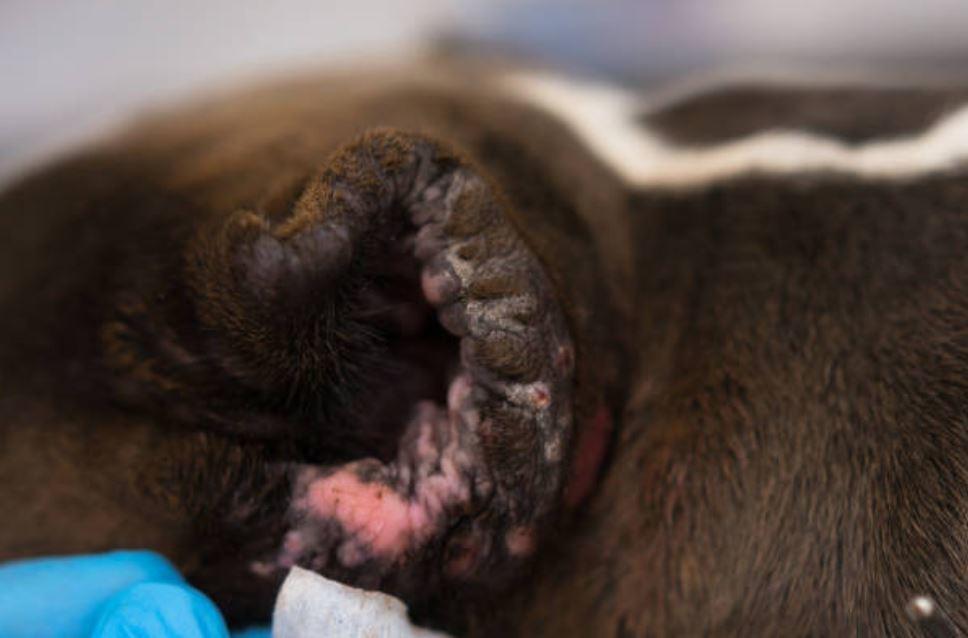
Malassezia otitis is often a sign of underlying allergic dermatitis. To treat it effectively, it is necessary to restore the auricular microbiota, eliminate intestinal dysbiosis and reduce Th2-mediated inflammation without abusing drugs that weaken the immune system.
1. Otitis in the Dog: Why Malassezia is a Symptom and Not the Cause
Otitis externa caused by Malassezia pachydermatis yeast does not arise in a vacuum. In the vast majority of cases, inflammation of the ear canal is the manifestation of a primary cause, almost always identifiable in allergic dermatitis (food or environmental).
When the auricular environment is altered due to heat and inflammation, Malassezia yeast, normally present on the skin, proliferates uncontrollably. Conventional treatments (antibiotics and cortisone) often treat only the symptom, turning the dog into a chronically ill person.
2. Resolving Dermatitis: The Protocol for Healing
To resolve otitis in a lasting way, it is necessary to act on the triggers of allergic dermatitis:
- Natural Functional Diet: Eliminate industrial pet-food (kibble) rich in additives and switch to a high-quality natural or wet diet to reduce the toxic load.
- Dysbiosis Control: The use of skin-specific probiotics helps to rebalance the gut-skin axis, reducing the Th2 immune response responsible for itching.
- Emunctory drainage: Support the liver and kidneys with herbal remedies if the dog has undergone prolonged drug therapy.
3. Natural Remedies and Advanced Otological Solutions
The holistic approach involves the use of substances that control the microflora without creating bacterial or fungal resistance.
Comparative Table of Remedies for Otitis and Malassezia
| Remedy | Mechanism of action | Main Benefit |
| Effective Microorganisms (EM) | They re-establish a positive microbiological environment | Counteract Malassezia and pathogenic bacteria |
| Grapefruit Seed Extract (GSE) | Natural and selective antimicrobial | Controls fungal growth without irritating |
| Colloidal Silver | Broad-spectrum antibacterial and antifungal | Effective on injured skin and in case of mixed infections |
| Kali carbonicum 6 CH | Homeopathic immunomodulator | Controls the growth of M. pachydermatis (validated in vitro) |
| MCT Oil | Source of medium-chain fatty acids | More stable than coconut oil, moisturizes and soothes |
4. Treatment of Otohematoma and Inflammation
In the case of complications such as otohematoma (blood collection in the auricle due to shaking of the head), homotoxicology offers targeted solutions:
- SIN 40: Complex remedy specific for the systemic treatment of otitis.
- SIN 34 (Igeakos): Essential for its anti-oedema and anti-inflammatory action in the case of haematomas and ear trauma.
- Ozonated sunflower oil: Powerful tissue regenerator with deep disinfectant properties.
Otitis in dogs
SOLVING ALLERGIC DERMATITIS (almost always a primary cause)
Allergic dermatitis causes severe itching and aInflammation of the skin, what can you do?
- Choose a diet free of allergenic substances
- No to very long antibiotic therapies that weaken the bacterial flora
- Avoid humidity
- Keep your ears clean at all times, do not use cotton swabs for cleaning or vinegar
- Strengthen the immune system
- Supporting the digestive system after long-term antibiotic treatment
- Control fleas and ticks using pesticides and functional natural remedies
The Causes of Dermatitis in Dogs
Flea saliva allergy (DAP=flea allergy dermatitis)
Otitis in dogs Secondary causes
The most common secondary cause is infection that if left untreated causes chronic otitis, inflammation is also a secondary cause. To treat the infection or inflammation it is always necessary to treat the primary cause.
Conventional treatments for the treatment of otitis in dogs
- Ear cleaning solutions for daily cleaning
- Acaricides if there are ear mites
- Topical antimicrobials (may contain glucocorticoids and antifungals)
- Antibiotics
- Antifungals
- Cortisone
The treatments listed above can have long-term side effects and weaken the dog’s immune system even more, promote the appearance of other diseases and alter the skin microbiome. Remember: medication only treats the symptoms and your dog will be chronically ill!
Holistic treatments and health restoration in case of otitis in dogs
What you should know!
- Nutrition: start changing your diet eliminate kibble and pet-food in favor of a natural food, if it is not possible to prepare food at home, move towards an exclusively wet food, here are some brands.
- Treating the Primary Causes: Dermatitis in Dogs with Natural Cures
- Combine a specific probiotic for skin and dermatitis problems and improve dysbiosis
- Avoid vaccinations as much as possible (vaccinate only after antibody titration)
- Minimize chemical drugs and pesticides
- Strengthen the immune system
Otitis in dogs Natural ear cleansers
EMIKO® PetCare ear drops reduce itching. Effective EM® microorganisms fight malassezia, bacteria and fungi by restoring a positive environment in the ears. Data sheet
Anti-mite Treatment for Dogs, Relieves Yeast Infections. These drops provide relief from itching and ear infections. It can also be used as an ear cleaning solution to eliminate bad odors and relieve dry, irritated and allergy-prone ears, which can also be used in cases of malassezia.
Pets Purest 100% Natural: Ear Cleaner for Dogs: Prevents excessive shaking, persistent itching, earwax and odors. Scientifically formulated to clean both healthy and infected ears and to keep them in good condition.
CANIS PLUS CARE FOR DIRTY AND SMELLY DOG EARS due to mite infestation, itching and inflammation. Felins Plus – Ear Care Drops
OTITIS FROM MALASSEZIA DROPS
Vetramil Oto Clean allows you to maintain the correct pH of the external ear, to bring the presence of earwax back to physiological levels and to make the environment inhospitable to new bacterial colonies.
Vetramil Oto Clean, used following otitis externa of bacterial, yeast or parasitic origin, allows simple prophylaxis, useful in preventing very frequent relapses in this type of pathology.
IT DOES NOT CREATE ANTIBIOTIC RESISTANCE. OTOCLEAN: Prevents and controls irritation, controls the microflora of the ear canal (Malassezia), has a cleansing effect on the ear canal, has an anti-itching effect, has a moisturizing effect.
Ozone therapy: A new antimicrobial paradigm
Medical ozone therapy is gaining ground as a complementary and, in some cases, alternative treatment for refractory ear infections. Ozone ($O_3$) acts as a pro-drug that reacts instantly with antioxidants and unsaturated fatty acids, inactivating bacteria, yeasts and fungi without harming healthy host cells.
Comparative clinical outcomes of topical ozone
In a study involving 27 dogs with otitis externa, topical ozone was compared with ciprofloxacin and a modern otic solution (florfenicol/terbinafine/mometasone). The evidence was overwhelming:
- Clinical success rate (OTIS-3 index): 100% for the ozone group, compared to 33.33% for ciprofloxacin and 66.66% for the multipurpose veterinary solution.
- Microbiological efficacy: Ozone completely eliminated bacterial growth, including difficult species such as Proteus mirabilis, Citrobacter braakii , and multidrug-resistant Acinetobacter .
- Cytologic improvement: The improvement was statistically more significant in the ozone group (p < 0.001) than in controls.
Ozone works by breaking the double bonds of fatty acids in bacterial membranes, triggering lipid peroxidation and oxidative damage to nucleic acids. In addition, it promotes tissue healing by modulating redox signaling pathways and stimulating the production of protective antioxidant enzymes such as superoxide dismutase (SOD) and glutathione peroxidase (GPx).
Study on the effectiveness of Ozone Therapy (2025)
| Treatment Group | Clinical Success Rate (OTIS-3) | Complete bacterial elimination | Cytological significance |
| Group I (Ozone) | 100% | Yes | p < 0.001 |
| Group II (Ciprofloxacin) | 33.33% | No | Modest improvement |
| Group III (Florf/Terb/Mom) | 66.66% | Partial | p = 0.003 |
FUNCTIONING: The moisturizing and emollient action of sunflower oil associated with the anti-inflammatory action of ozone, gives relief to the dog, allows optimal oxygenation of the deepest tissues and guarantees a reduction in healing times. Ozo-Vet – OZONATED OIL
Microbiome-based strategies: Topical probiotics
The dog’s ear canal is not sterile, but it houses a commensal microflora that prevents colonization by foreign pathogens. The modern approach aims to restore this natural balance rather than just sterilize the area.
SPRAY Topical probiotics and microbial competition
The use of topical probiotics, such as Bacillus subtilis and Lactobacillus species, acts through competitive exclusion mechanisms and bacteriocin production.
- Bacillus subtilis: This gram-positive bacterium is capable of forming highly resistant spores, making it ideal for stable topical formulations. It has been shown to colonize the intestinal tract without adverse effects and stimulate the production of IgA, suggesting a local immunomodulatory potential also in the ear canal.
PROAURIS – ProAuris is a probiotic ear treatment containing the same live lactobacilli strains as ProAtop (Lacticaseibacillus rhamnosus YUN-S1.0 and Lactiplantibacillus plantarum YUN-V2.0)
- Probiotic sprays : The use of these sprays has documented successful cases in refractory chronic ear infections. In one case report, BID application of a probiotic spray eliminated profuse growth of Staph. pseudintermedius and marbofloxacin-resistant alpha-hemolytic Streptococcus in just 8 days.
- Effect on Malassezia: Probiotics repopulate the duct with beneficial bacteria, stabilizing the environment and making it less hospitable to opportunistic yeast proliferation, especially after courses of antibiotics that have destroyed the protective microbiome.
Otohematoma in dogs Homotoxicological remedies oral
Is it possible to treat otohematoma in dogs with natural cures such as homotoxicology, homeopathy and phytotherapy? The answer is yes! Below are the best natural remedies for otohematoma in dogs.
Complete remedy for the treatment of otitis is SIN 40, description here
It is a homeopathic remedy with anti-inflammatory, anti-edema, protective vessel and pain-relieving action. Indicated in case of inflammation, bruises, hematomas and trauma.
Malassezia in dogs: the homeopathic remedy Kali carbonicum
A series of in vitro tests were performed, in which a suspension of M. pachydermatis colonies was diluted 1:1000 in sterile saline and 10 μL of pre-selected homeopathic medicinal products were added. Sulphur 6 CH, Dolichos pruriens 6 CH and Kali carbonicum 6 CH were chosen from a pilot study. Kali carbonicum 6 CH has been considered a promising remedy to be tested in clinical conditions, probably due to its ability to control yeast growth without creating selective pressure capable of inducing resistance mechanisms. Kali carbonicum 6 CH controls the growth of Malassezia pachydermatis.
FAQ MALASSEZIA AND OTITIS IN DOGS
Answer: The primary cause is usually an allergic dermatitis or food intolerance. The inflammation produced by the allergy alters the environment of the ear canal, allowing Malassezia yeast to proliferate. To treat it, the triggering allergen must be identified.
Answer: Yes, in uncomplicated forms it is possible to use natural cleansers based on effective microorganisms (EM), colloidal silver or grapefruit seed extracts. These remedies control the bacterial and fungal flora without destroying the protective skin microbiota.
Answer: An industrial diet loaded with preservatives can cause intestinal dysbiosis and liver overload. Excess toxins are eliminated through the skin and ears, creating the inflammation necessary for Malassezia to grow.
Answer: It is a homeopathic remedy that, according to in vitro clinical studies, has shown promise in controlling yeast growth Malassezia pachydermatis without creating selective pressures that lead to drug-resistance.
Answer: You should use oily natural detergents or otological solutions without alcohol or vinegar. Never use cotton swabs, but apply the drops (such as OTOCLEAN or ESE ear drops), massage the base of the ear and remove excess dirt with sterile gauze.
Clinical Safety and Prevention of Ototoxicity
Ototoxicity is a primary concern when treating ears with a damaged tympanic membrane. Many substances, natural or synthetic, can cause vestibular damage (head tilt, nystagmus, ataxia) or cochlear damage (permanent deafness) if they penetrate the middle ear.
IN CASE OF PERFORATED EARDRUM AND OTOTOXICITY, DO IT YOURSELF
Perforated Gable Management
In the event of suspected perforation, the choice of products must be extremely strict:
- Cleaning Agents: Squalene is the only ceruminolytic agent that is considered universally safe in dogs even in the presence of tympanic rupture. Cleaners containing dioctyl sodium succinate or carbamide peroxide cause severe neurological and morphological damage when instilled in the middle ear. Aurìa Detergent is a gentle ear cleaner, ideal for cleaning the outer ear of dogs and cats. This product is particularly suitable for gently removing excess earwax, maintaining the natural balance of the ear. Its formulation contains vegetable squalene, a natural extract from olive oil with excellent ceruminolytic properties, safe even for sensitive animals thanks to its absence of ototoxicity. Acetic acid helps reduce residual moisture, preventing maceration and the risk of infection in the ear canal, while adelmidrol (an aliamide analogous to palmitoylethanolamide) has a soothing action, reducing redness and irritation. Aurìa Detergent is not a veterinary drug, but a product for the daily hygiene of your pets’ ears.
- Antiseptic Solutions: Chlorhexidine is only safe at concentrations below 0.2%. Concentrations of 2% induce both vestibular and cochlear lesions. TrizEDTA is generally well tolerated and acts synergistically with antibiotics against Gram-negative bacteria.
- Antibiotics: Aminoglycosides such as neomycin and amikacin have a high risk of ototoxicity if exposure occurs in the middle ear. Gentamicin is considered an exception with a lower relative risk. Tobramycin and ticarcillin have shown dramatic reductions in brainstem auditory evoked potentials (BAER) tests and should be used with extreme caution.
- Natural Remedies: Apple cider vinegar (ACV) and isopropyl alcohol, if used incorrectly or in excessive concentrations, can irritate already inflamed tissues and potentially damage deep structures. The minimum dilution for ACV should be 1:3 with purified water or green tea.
Guide to the selection of substances based on tympanic integrity
| Eardrum condition | Recommended Substances | Substances to Avoid |
| Intact | Almost all registered veterinary formulations, diluted essential oils, ceruminolytic cleansers | – |
| Suspect/Punctured | Sterile Saline, TrizEDTA, Squalene, Aqueous Gentamicin, Diluted Injectable Enrofloxacin | Alcohol, Chlorhexidine > 0.2%, Neomycin, Amikacin, Honey > 50%, Polymyxin B, Ticarcillin |
Article published 2024 – Updated 2026


