


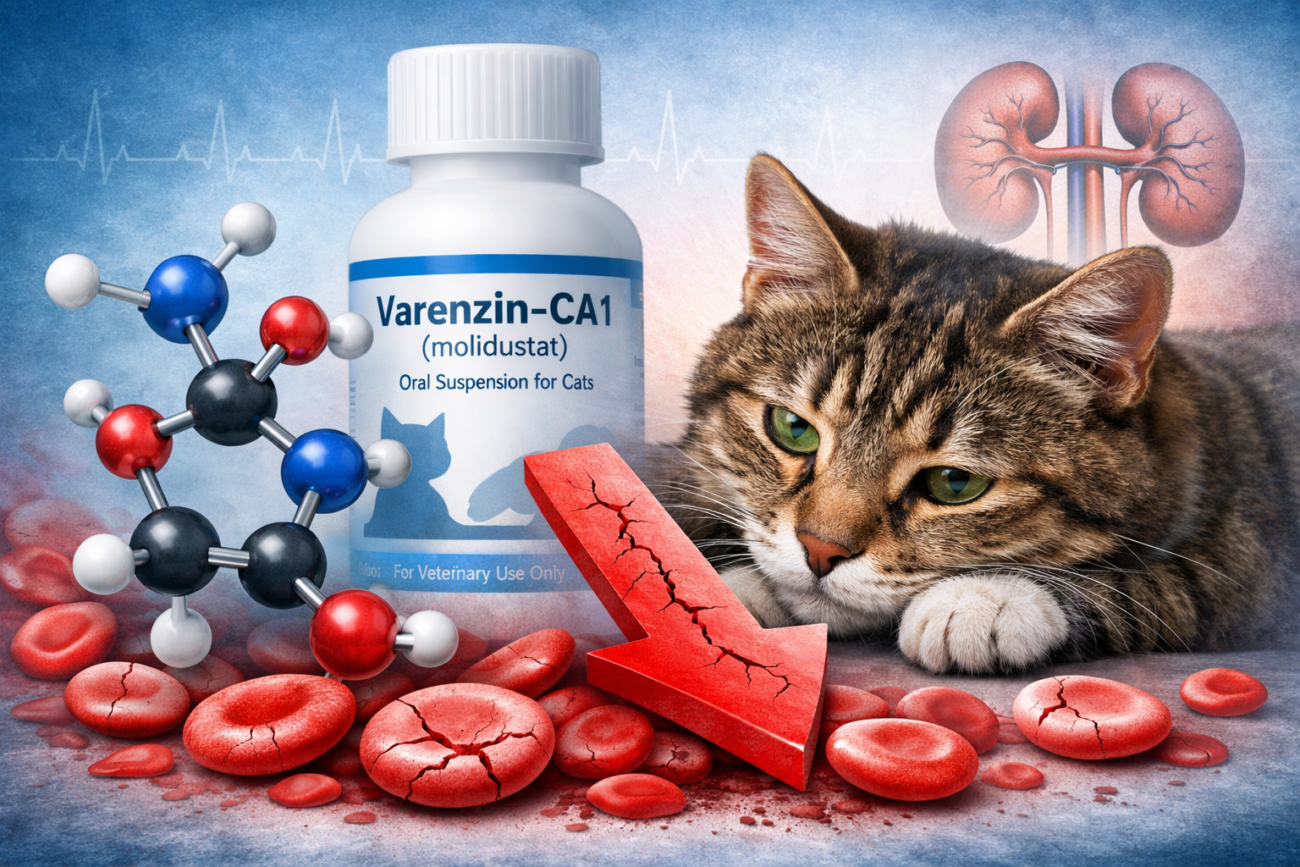
Anemia is one of the most subtle and debilitating complications of Chronic Kidney Disease (CKD) in cats. Until recently, the only way forward was the off-label use of recombinant human erythropoietin (ESA), a “replacement” therapy burdened by the risk that the cat’s immune system would attack the drug, worsening anemia (Pure Red Cell Aplasia).
Today, functional veterinary medicine welcomes a paradigm shift: Varenzin-CA1 (molidustat). It is not a question of providing an external hormone, but of reactivating an internal biological mechanism extinguished by the disease.
What is Varenzin-CA1 and the Science of HIF-PH Inhibitors
Varenzin-CA1 is a liquid oral suspension based on molidustat, belonging to the class of hypoxia-inducible factor prolyl hydroxylase (HIF-PH) inhibitors.
This technical definition hides a fascinating mechanism: the drug “tricks” the cat’s body into believing that it is in a condition of low oxygenation (hypoxia), similar to high altitude.
Bio-physiological mechanism of action
Unlike the old therapies, molidustat works on three synergistic fronts to restore blood homeostasis:
- Stabilization of the HIF factor: By inhibiting the enzyme prolyl hydroxylase, it stabilizes the HIF factor. This activates the transcription of the erythropoietin (EPO) gene in the kidneys and liver.
- Endogenous EPO Production: It stimulates the cat to produce its own physiological erythropoietin, avoiding autoimmune reactions.
- Hepcidin Modulation: In CKD, chronic inflammation raises hepcidin levels, blocking iron. Molidustat reduces hepcidin, “unlocking” iron stores and increasing its intestinal absorption, making it available to the bone marrow to create new red blood cells.
Administration Protocol: “Pulse Therapy”
Treatment with Varenzin is not continuous, but cyclical, to mimic physiological stimulation and prevent polycythemia (excess red blood cells).
- Active Cycle: One oral administration per day for up to 28 consecutive days.
- Wash-out period: Mandatory break of at least 7 days between cycles.
- Monitoring: Weekly measurement of HCT (Hematocrit/PCV) and reticulocytes starting on the 14th day of the cycle.
Clinical Note: It is essential to weigh your cat before each new cycle to adjust the dosage to the milligram.
Comparison: Varenzin vs ESA (Classic Erythropoietin)
| Feature | Classical ESAs (Darbepoetin/Epoetin) | Varenzin-CA1 (Molidustat) | Functional Benefit |
| Mechanism | Replacement (Exogenous Hormone) | Endogenous stimulant (HIF mechanism) | No immune rejection. |
| Administration | Subcutaneous injection (painful) | Oral Liquid (palatable) | Less stress for the cat and the owner. |
| Metabolism Iron | Not managed directly | Improved (Reduces Hepcidin) | Optimize the use of available iron. |
| Immunological Safety | Risk of anti-EPO antibodies | Very High | Preserves residual capacity of the marrow. |
| Approval | Off-label use (Human) | Specific Veterinary (Cat) | Dosages and studies calibrated on the feline species. |
Clinical Efficacy and Observed Benefits
Treatment is considered effective if, within 28 days of the cycle, an absolute increase in hematocrit ≥4% or a relative increase of ≥25% is observed.
The owners report a marked improvement in the Quality of Life:
- Increased energy and return to game behavior.
- Increased appetite and grooming (grooming of the coat).
- Rosier mucous membranes and better mobility.
Side Effects Management and Monitoring
Despite being an advanced therapy, molidustat has a powerful effect on vascular and hematopoietic physiology.
Common (gastrointestinal) effects
Vomiting is the most frequent adverse effect (about 40-50% of cases). It is often transient, but may require management with antiemetics or administration of the drug with a small amount of food (although absorption is optimal in the fasted state).
Serious Risks: Hypertension and Thromboembolism
By stimulating erythropoiesis, it increases blood viscosity.
- Monitor: Systemic blood pressure (hypertension risk) and neurological signs (seizures).
- Immediate stop: In case of signs of polycythemia (brick red gums, tachycardia, excessive PCV) or thromboembolic events (sudden paralysis, cold paw).
Critical drug interactions (chelation)
In an integrated medicine approach, pay attention to other supports for CKD. Varenzin should be administered at least one hour before or after:
- Phosphorus binders (chelators).
- Iron supplements.
- Antacids containing Calcium, Magnesium or Aluminium.
These compounds can “bind” molidustat in the stomach, preventing its absorption and frustrating therapy.
Conclusion: Varenzin-CA1 represents the new pharmacological Gold Standard . It shifts the approach from injecting foreign substances to reactivating cat’s natural metabolic pathways, offering real hope for managing kidney anaemia safely and at home.
Answer: Yes, Varenzin-CA1 (molidustat) is the first approved oral alternative that replaces ESA injections. It works by stimulating the cat’s natural erythropoietin production, eliminating the pain of bites and drastically reducing the risk of adverse immune reactions.
Question: How long does it take for Varenzin to take effect in anemic cats? Answer: The first clinical improvements (energy, appetite) are often noticed within the first 2 weeks. Significant increase in hematocrit (PCV) is usually assessed from day 14 of treatment. The full cycle takes 28 days to achieve maximum response.
Answer: The most frequent side effect is vomiting (about 40-50% of cats). Rarer but serious effects, linked to increased red blood cells, include hypertension and thromboembolism. Weekly veterinary monitoring of blood parameters and blood pressure is essential.
Answer: No, not at the same time. Phosphorus binders and supplements containing iron, calcium, or magnesium may prevent the absorption of Varenzin. It is necessary to space the administration of the drug by at least one hour from other supplements or medicated meals.
Answer: If the hematocrit rises too high, the blood becomes viscous (thick), increasing the risk of clots and stroke. Symptoms include dark red gums and tachycardia. In this case, the drug should be stopped immediately and the veterinarian will evaluate fluid therapy in the vein.


Discussion about this post