


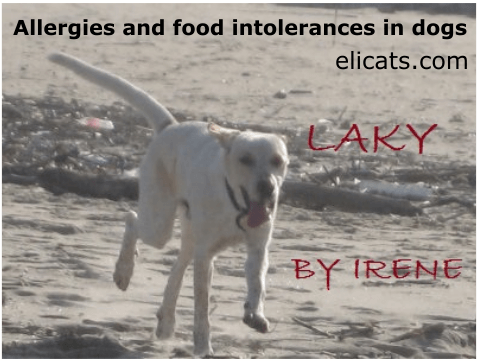
Allergies and food intolerances are very common and represent approximately 30% of the causes of itch, skin lesions and recurring otitides in dogs
Allergies and food intolerances in dogs
Food intolerances
1. Inability to digest fat, lactose, additives and artificial colors
2. Cause diarrhea or vomiting
3. Do not create a typical allergic reaction
4. Do not involve the immune system
Some symptoms
- Itch
- Vomit
- Diarrhea
- Colitis
- Sinusitis
- Pseudo-asthma crisis
- Conjunctivitis
- Mood swings
- Epileptic seizure
- Tendency to gain weight or to not absorb nutrients
1. Itch is the characteristic symptom
2. Hypersensitivity to a protein contained in the food
3. Skin rashes
Allergies and food intolerances in dogs
Some foods that trigger allergies
- Beef
- Dairy product
- Chicken
- Lamb
- Fish
- Eggs
- Corn
- Wheat
- Soy
As you surely have understood, the foodstuffs which promote allergies are the ones that most you can find in industrial dog-food; this should make us think!
Symptoms of food allergies in dogs
- Itch
- Chronic ear infections
- Alopecia
- Skin infections not responding to antibiotic therapy
- Excessive stool frequency
Lesion locations
- Face
- Ear
- Forepaws
- Underarm area
- Area around the anus
Food allergies show themselves as recurring ear problems (yeast infection) and appear all year long
How can you tell if your dog has developed a food allergy?
Feed the dog (at least for 3 months) with only one type of protein and carbohydrate that he had never eaten before.
- Rabbit
- Black rice or venus rice
- Venison meat
- Vegetables
IMPORTANT
The immune system
When an allergenic substance enter the body, the immune system triggers a series of reactions; not only you will see your dog scratch himself for the itch, he/she will not be in an excellent state of health and will present dull coat, recurrent skin infections or inflammations.
It is useful to ask your veterinarian a therapeutic plan that aims to help the dog’s immune system.
