


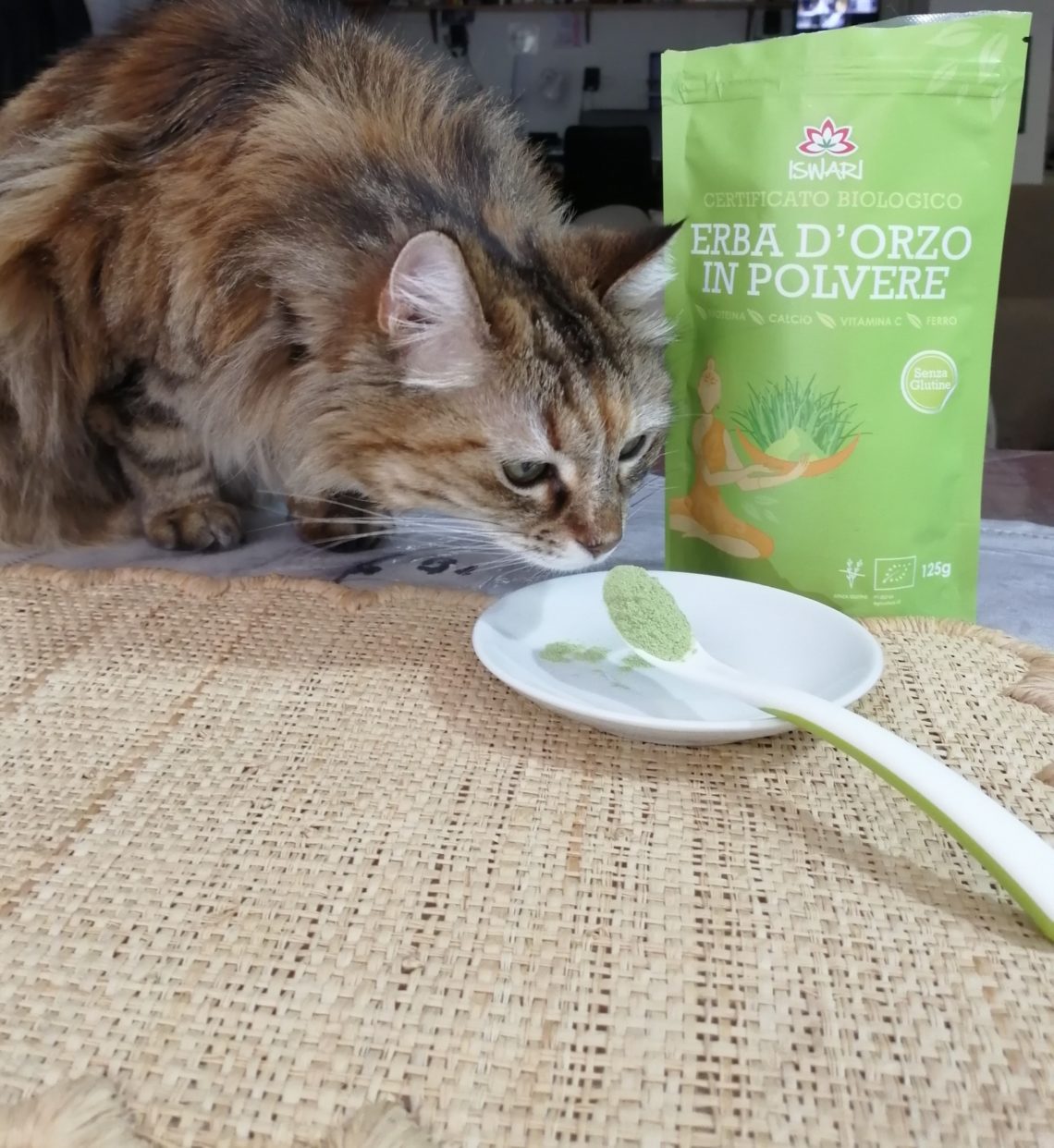
Barley grass is a green superfood used as a complementary supplement for dogs and cats. It is one of the richest natural sources of chlorophyll, and it contains high levels of superoxide dismutase (SOD) — an antioxidant enzyme that neutralises free radicals — along with vitamins, minerals, amino acids and plant enzymes. In pets it is mainly used as antioxidant and anti-inflammatory support, for liver protection, low-grade gut inflammation and immune balance. It is introduced gradually, in very small amounts, and it never replaces a balanced diet or veterinary treatment.
I have worked as an animal naturopath since 2011, and barley grass has been part of my supplement shelf almost from the beginning. It is one of those quiet remedies: nothing dramatic happens in week one, but over a couple of months you often see a difference in coat quality, breath and stool consistency. Here is what it actually is, what it is useful for, and how I use it.
What is barley grass?
Barley grass is the young green leaf of the barley plant (Hordeum vulgare), harvested before the grain forms and dried into powder or tablets. At that early stage the leaf is nutritionally very different from barley grain: it is gluten-free in its pure form, low in starch, and dense in chlorophyll, antioxidant enzymes and micronutrients.
A 2018 review published in Oxidative Medicine and Cellular Longevity describes barley grass as containing hundreds of active enzymes, including superoxide dismutase, catalase and peroxidase, alongside flavonoids such as saponarin and lutonarin, GABA, chlorophyll, dietary fibre, selenium, calcium and potassium (Zeng et al., 2018). That research is in humans and in laboratory models, not in dogs and cats — an honest point I always make. What we do in integrative pet care is extrapolate cautiously, use small doses, and observe the individual animal.
What does barley grass contain?
The nutritional profile is the reason this plant earned the “superfood” label:
- ✅ SOD (superoxide dismutase) — the antioxidant enzyme that converts superoxide radicals into less damaging molecules
- ✅ P4-D1 — a glycoprotein studied for its protective action on cell nuclei
- ✅ Chlorophyll — deodorising, mildly detoxifying, supportive of red blood cell health
- ✅ Vitamins A, B group (including B12), C, E and K
- ✅ Minerals — magnesium, calcium, iron, selenium, iodine
- ✅ Complete protein containing all essential amino acids
- ✅ Flavonoids saponarin and lutonarin, with antioxidant and anti-inflammatory activity
- ✅ Natural fibre, useful for gut motility and microbiome balance
⚠️ Heat destroys the enzymes. If you cook barley grass powder into food, or add it to a hot meal, you lose the SOD activity that makes it interesting in the first place. Always add it to food at room temperature.
What is barley grass used for in dogs and cats?
In my practice I reach for barley grass as complementary support, alongside — never instead of — the veterinary plan, in these situations:
| Situation | Why barley grass may help |
|---|---|
| Chronic low-grade inflammation | Antioxidant enzymes and flavonoids buffer oxidative stress |
| Liver support | Chlorophyll and antioxidants support hepatic detox pathways |
| IBD and chronic gastritis | Gentle fibre plus anti-inflammatory plant compounds |
| Bad breath (halitosis) | Chlorophyll is a natural deodoriser |
| Anaemia and convalescence | Iron, B12, chlorophyll, complete amino acid profile |
| Skin conditions and dermatitis | Antioxidant load reduces oxidative damage in the skin barrier |
| Cancer cachexia support | Nutrient-dense, low volume, easy to hide in food |
| Pancreatitis (recovery phase only) | Very low fat, gentle on the digestive system |
➡️ In cats with chronic kidney disease I use it only in tiny amounts and only after checking the phosphorus and potassium content of the specific product with the treating vet, because green powders vary widely in mineral load. This is not a supplement I add blindly to a renal patient.
Barley grass dosage for dogs and cats
There is no validated veterinary dosage for barley grass, so what follows is the practical range I have used over the years — always starting at the bottom of it, always with veterinary agreement.
Start with a pinch. Literally a pinch, mixed into wet food, for the first five to seven days. Then build up slowly over two weeks.
| Weight | Starting dose | Maintenance dose (organic powder) |
|---|---|---|
| Cat, any size | a pinch | ⅛ – ¼ tsp per day |
| Dog under 10 kg / 22 lb | a pinch | ¼ tsp per day |
| Dog 10–25 kg / 22–55 lb | ⅛ tsp | ½ tsp per day |
| Dog 25–40 kg / 55–88 lb | ¼ tsp | ¾ tsp per day |
| Dog over 40 kg / 88 lb | ¼ tsp | 1 tsp per day |
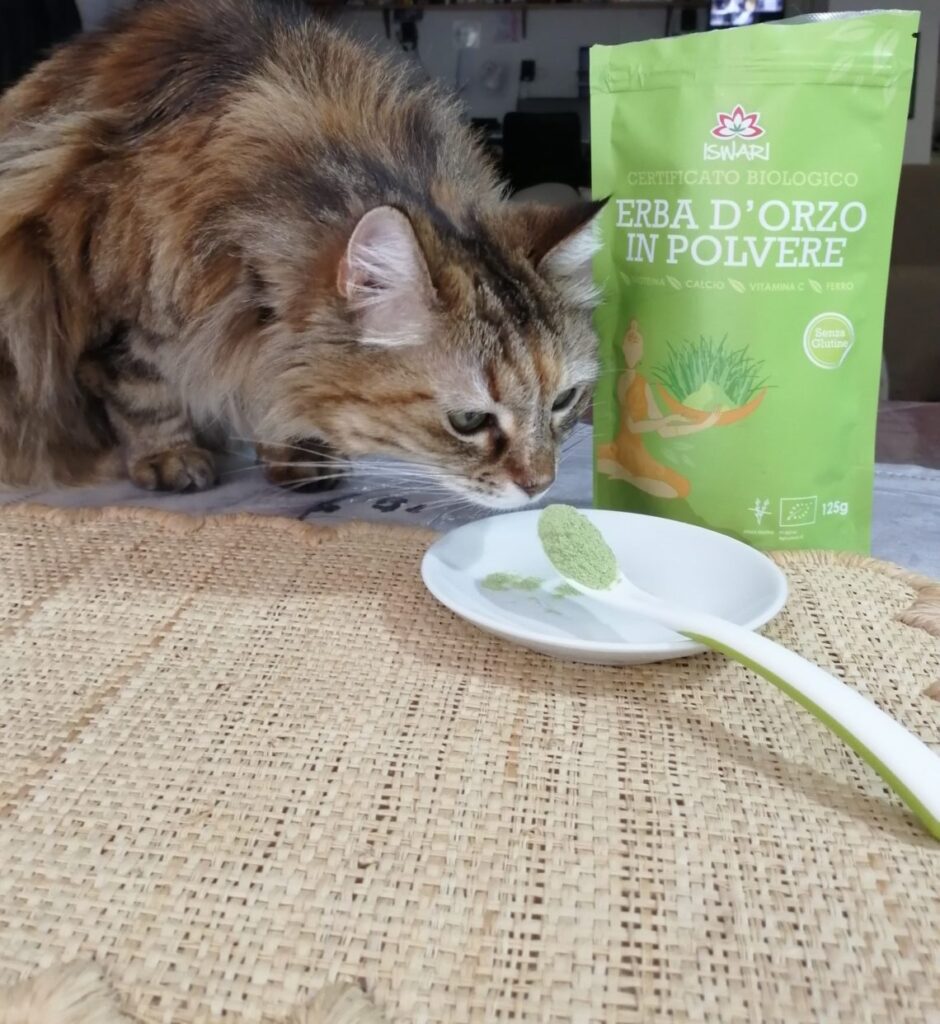
How to give it: stir into wet food, a spoonful of plain kefir, or a little bone broth. Cats often refuse it in the first days — the green smell is strong. Mixing it into something aromatic (a teaspoon of tuna water, a smear of pâté) usually solves it. If your cat still refuses, tablets crushed and split across two meals sometimes work better.
Cycle it. I use it five days on, two days off, or three weeks on and one week off, rather than continuously all year.
⚠️ Expect a detox reaction in some animals. In the first administrations, vomiting or soft stool can appear. That is precisely why you start with a pinch. If it happens, stop for three days and restart at half the amount. If it happens again, this is not the right supplement for that animal.
How do I choose a good barley grass product?
Not every barley grass powder on the shelf is suitable for a dog or a cat. Before buying, I check the label for:
- Certified organic — barley is a crop treated with pesticides; with a concentrated green powder you concentrate residues too
- 100% barley grass juice powder or leaf powder, with nothing else in the ingredient list
- No added sugars, no sweeteners, no flavourings — many human green powders contain stevia, apple juice powder or inulin blends
- No xylitol ⚠️ — this is critical: xylitol is toxic to dogs, and it appears in some human “green” formulas
- No added iodine-rich algae unless intended — many green blends add spirulina, chlorella or kelp, which changes the iodine load significantly for cats
- Batch testing for heavy metals, published or available on request
- Opaque packaging — light degrades chlorophyll and enzymes fast
➡️ A plain, single-ingredient organic barley grass juice powder from a reputable human supplement brand is usually a better choice than a pet-branded “green blend” with a long ingredient list.
When should you see a vet instead?
Barley grass is a nutritional supplement, not a treatment. Book a veterinary appointment — not a supplement order — if your dog or cat shows:
- Vomiting or diarrhoea lasting more than 24–48 hours
- Weight loss, or refusal to eat for more than one day in a cat (risk of hepatic lipidosis)
- Increased thirst and urination
- Yellow gums or eyes, pale gums, or dark urine
- Persistent bad breath with drooling or difficulty eating — usually dental disease, not something chlorophyll will fix
- Any chronic condition that has not been diagnosed yet
⚠️ Talk to your vet before adding barley grass if your animal is on warfarin or other anticoagulants (vitamin K content), on thyroid medication, in chronic kidney disease, or scheduled for surgery within two weeks.
My personal note
The mistake I see most often is treating green powders as a shortcut. Someone feeds a poor-quality kibble, sees a dull coat and digestive trouble, and adds a scoop of barley grass hoping it will compensate. It will not. This is a supplement that works on the margins of an already decent diet — it adds antioxidant capacity to a good foundation, it does not build the foundation.
The second mistake is dose enthusiasm. A quarter of a teaspoon looks like nothing next to a 30 kg dog, and people are tempted to give a tablespoon. Concentrated chlorophyll and fibre at that dose produces exactly what you would expect: green, loose, unhappy stool. Small and consistent beats large and occasional.
No copy-paste, no DIY, no hearsay. Ask your vet before you add anything to the bowl.
FAQ — Barley Grass for Dogs and Cats
Is barley grass safe for dogs and cats? Pure organic barley grass is generally well tolerated by both species in small amounts. It should be introduced gradually, because vomiting or soft stool can appear in the first administrations. Products containing xylitol, added sweeteners or algae blends are not suitable.
What are the benefits of barley grass for pets? It supplies chlorophyll, superoxide dismutase, flavonoids, vitamins and minerals. It is used as antioxidant and anti-inflammatory support, for liver and gut health, for bad breath, and during convalescence or anaemia.
How much barley grass can I give my cat? In my experience, cats do well on ⅛ to ¼ teaspoon of organic powder per day, starting with a pinch for the first week. Always confirm the amount with your vet, especially in cats with kidney or thyroid disease.
Can barley grass replace my pet’s diet or medication? No. It is a complementary supplement added to an already balanced diet, and it does not replace any veterinary treatment or prescribed medication.
Is barley grass the same as barley grain or malt? No. Barley grass is the young green leaf harvested before the grain develops. Pure barley grass powder is gluten-free and low in starch, unlike the grain.
Can I plant barley grass for my cat to nibble? Yes, and many cats enjoy it. Fresh cat grass grown from barley seed serves a different purpose though — mechanical, helping with hairballs — while the powder is used for its concentrated nutrient and antioxidant content.
External reference: Zeng Y. et al., Preventive and Therapeutic Role of Functional Ingredients of Barley Grass for Chronic Diseases in Human Beings, Oxidative Medicine and Cellular Longevity, 2018 — https://pmc.ncbi.nlm.nih.gov/articles/PMC5904770/
Reviewed August 2026 — written by Eli, animal naturopath since 2011.
Disclaimer: This content is for informational purposes only and does not constitute medical advice or replace veterinary consultation. The homeopathic and natural remedies mentioned have no scientifically validated efficacy. Always consult your vet before making changes to your pet’s diet or administering any remedy.

Discussion about this post