


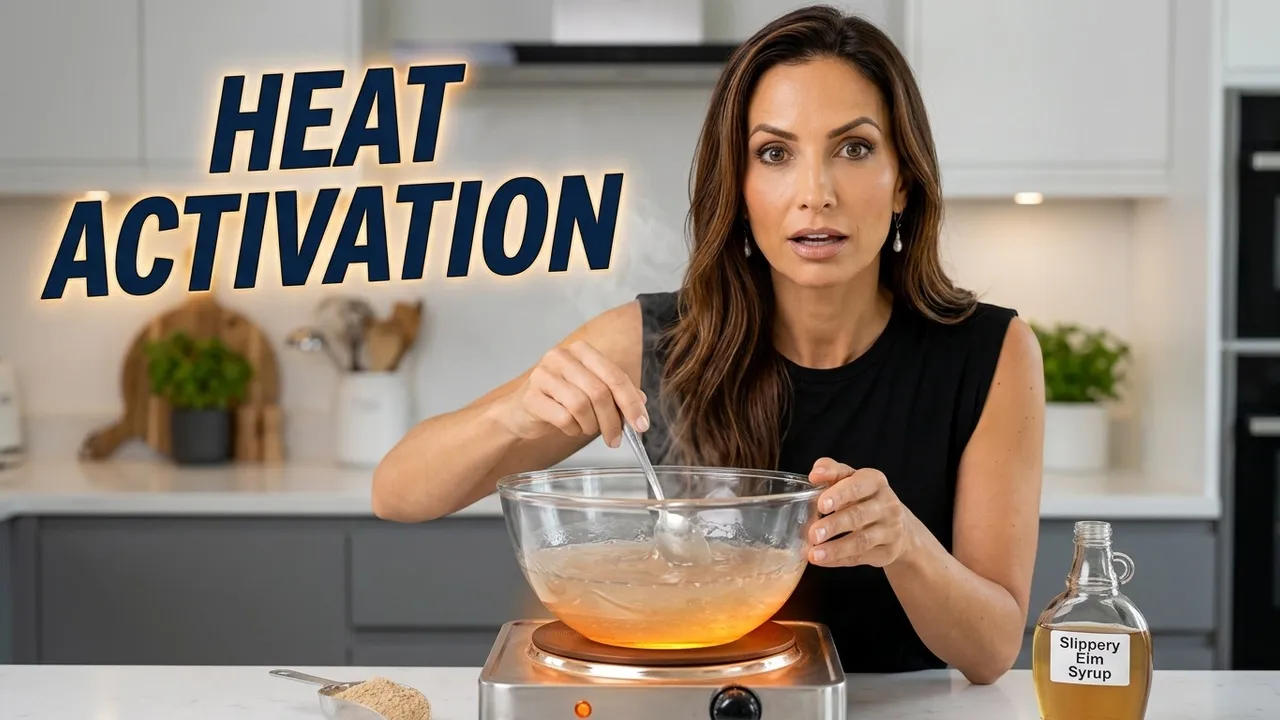
Slippery elm (Ulmus rubra) is a demulcent herb whose inner bark turns into a protective gel the moment it meets water, coating the entire digestive tract from mouth to colon. I have used it for years in my naturopathic practice with dogs and cats dealing with IBD, uremic gastritis from CKD, leaky gut and chronic diarrhea. The working dose of prepared syrup is 5 ml twice daily for cats and small dogs, 10 ml twice daily for dogs over 22 lb (10 kg), given about 30 minutes before meals. It must always be spaced at least two hours away from any oral medication.
What is slippery elm and how does it work?
Slippery elm is a North American tree whose inner bark contains complex polysaccharides that hydrate into a thick, slick mucilage. That mucilage is not absorbed — it works mechanically, sitting on top of irritated tissue like a bandage.
Three things happen at once:
- Demulcent action. The gel lines the esophagus, stomach and intestinal wall, shielding the epithelium from excess gastric acid, bile and circulating toxins.
- Microbiome support. Those same fibers behave as a prebiotic, feeding Bifidobacteria and supporting short-chain fatty acid production, especially butyrate — the primary fuel of the colon cells.
- Local antioxidant activity. In vitro work by Langmead and colleagues (2002) found antioxidant effects for slippery elm among herbal preparations used by people with inflammatory bowel disease, which supports the calming effect I observe clinically.
⚠️ Worth saying plainly: slippery elm does not lower creatinine, cure IBD, or fix the underlying disease. It buys comfort — and in an animal that has stopped eating, comfort is what restarts everything else.
What does slippery elm bark actually contain?
| Bioactive component | Biological function | Clinical benefit for the animal |
|---|---|---|
| Mucilage (polysaccharides) | Forms a hydrocolloid gel | Protective film over ulcerated, inflamed tissue |
| Tannins | Astringent, mildly antimicrobial | Reduces fluid loss in diarrhea, tightens mucosa |
| Calcium oxalate | Trace bio-mineral | Structural; present in traces, see cautions below |
| Vitamins A, B complex, C, K | Enzymatic cofactors | Antioxidant support and clotting cofactor (vit. K) |
When should you use slippery elm in dogs and cats?
Chronic kidney disease and the gut-kidney axis
In cats and dogs with CKD, uremic toxins the kidneys can no longer clear irritate the stomach lining. The result is the picture every CKD owner knows: the cat walks to the bowl, sniffs, licks its lips, and walks away.
Slippery elm helps by soothing urea-irritated mucosa, easing nausea so appetite returns, and protecting the stomach without suppressing gastric acid the way synthetic acid blockers do — which matters in an animal that still needs to digest protein.
This is the use I know best. My own cat, Luce, has stage 3–4 CKD, and slippery elm has been part of her comfort protocol on and off for years.
IBD and intestinal permeability
In chronic inflammatory bowel disease the mucosal barrier is compromised — the “leaky gut” pattern. The mucilage physically covers the damaged surface, reducing the traffic of allergens and bacterial fragments across an inflamed wall, and calming cramping and bloating.
Diarrhea and constipation
Slippery elm is amphoteric — it regulates in both directions. In diarrhea, the mucilage absorbs excess water and bacterial toxins and firms up the stool. In constipation, it lubricates transit and softens passage.
How do you prepare slippery elm syrup for a dog or cat?
Dusting dry powder on food is the most common mistake I see. Dry powder never fully hydrates, so it never forms the gel — and the gel is the remedy.
What to buy: pure inner bark powder with no additives, fillers or sweeteners. In the US, Only Natural Pet and Frontier Co-op both sell clean single-ingredient bark powder; in the UK and Europe, AniForte is widely available. Good powder is grayish-tan with a faint maple-like smell. If it is bright white or odorless, it is likely cut.
Hot-extraction recipe
- Base ratio. Whisk 1 heaping teaspoon (about 4 g) of powder into 1 cup (250 ml) of cold water.
- Activate. Bring to a gentle boil in a small pan, stirring constantly to prevent lumps.
- Thicken. As soon as it boils, kill the heat and keep stirring until it reaches a syrupy, gel-like consistency.
- Administer. Let it cool completely. Give by needle-free syringe directly into the mouth, or mixed into a very small amount of highly palatable food, separate from the main meal.
Store the syrup in the fridge and use within three to four days.
Daily dosage
| Animal | Prepared syrup | Frequency |
|---|---|---|
| Cats | 5 ml | Twice daily |
| Dogs under 22 lb (10 kg) | 5 ml | Twice daily |
| Dogs over 22 lb (10 kg) | 10 ml | Twice daily |
➡ Timing rule: give 30 minutes before the meal. That is what turns it from a supplement into a coating.
What are the cautions and drug interactions?
Because slippery elm forms a physical film, it can slow or reduce absorption of oral drugs — including ones that matter, such as phenobarbital, cardiac medication, thyroid medication, antibiotics and phosphate binders.
- ✅ Golden rule: at least two hours between slippery elm and any oral medication or binder.
- ⚠️ Pregnancy: avoid, or clear it with your vet first, on the historical concern of uterine stimulation.
- ⚠️ Calcium oxalate stone formers: the bark contains oxalate in traces. In a dog or cat with a documented calcium oxalate urolith history, discuss it with your vet before long-term daily use.
- ⚠️ Sustainability: Ulmus rubra is listed as at-risk by United Plant Savers. Buy from suppliers who state cultivated or sustainably harvested sourcing — this matters more in the US market, where wild-harvest pressure is real.
When should you call the vet instead?
Slippery elm is supportive care, not triage. Stop and get veterinary help if you see repeated vomiting over 24 hours, black or tarry stool, blood in vomit or stool, refusal of food beyond 24 hours in a cat (hepatic lipidosis risk), abdominal pain with a rigid belly, or sudden collapse and dehydration.
FAQ
What does slippery elm do for a cat with kidney disease?
In chronic kidney disease, slippery elm soothes the uremic gastritis caused by toxins the kidneys can no longer filter. It reduces nausea, vomiting and food refusal by coating the stomach lining, without drastically altering gastric pH the way acid-blocking drugs do.
How much slippery elm can I give my cat?
The standard dose is 5 ml of prepared syrup twice daily, given about 30 minutes before meals. That syrup is made from roughly 1 heaping teaspoon of bark powder simmered into 1 cup of water. Always keep it two hours apart from any medication.
Does slippery elm stop diarrhea in dogs?
Yes. The mucilage absorbs excess fluid and bacterial toxins in the intestine while coating the inflamed wall, which reduces spasm and firms the stool. It works in both acute diarrhea and chronic patterns such as IBD, and it also feeds beneficial gut flora as a prebiotic.
Can I give slippery elm with my dog’s medication?
No — not at the same time. The gel barrier can block proper drug absorption. Give slippery elm at least two hours before or after any oral medication, supplement or phosphate binder.
What is the difference between slippery elm and a chemical acid blocker?
Acid blockers such as omeprazole reduce acid production. Slippery elm does not interfere with digestion at all — it lays down a physical protective layer over the mucosa, defending the tissue from the acid already there and supporting normal mucus production and tissue repair.
Is slippery elm safe for long-term daily use?
In my experience it is well tolerated over months in both dogs and cats, provided the two-hour medication spacing is respected and the animal has no calcium oxalate stone history. That said, if a pet needs it every day indefinitely, the real question is what is driving the inflammation underneath.
💚 My personal note
Slippery elm is one of the few remedies I keep in the cupboard permanently, and one of the few I would not want to practice without. But it is also the remedy most often used wrong — sprinkled dry on kibble, given with the pills, expected to fix a kidney value.
Use it as what it is: a barrier, a comfort measure, a way to buy an inflamed gut enough peace to start healing. Prepare it properly, keep it two hours from the medications, and give it before the meal, not after.
External reference: Langmead L, Dawson C, Hawkins C, et al. Antioxidant effects of herbal therapies used by patients with inflammatory bowel disease: an in vitro study. Aliment Pharmacol Ther. 2002;16:197-205.
Also: Hawrelak JA, Myers SP. Effects of two natural medicine formulations on irritable bowel syndrome symptoms: a pilot study. J Altern Complement Med. 2010;16:1065-71.
Disclaimer: This content is for informational purposes only and does not constitute medical advice or replace veterinary consultation. The homeopathic and natural remedies mentioned have no scientifically validated efficacy. Always consult your vet before making changes to your pet’s diet or administering any remedy.

Discussion about this post